
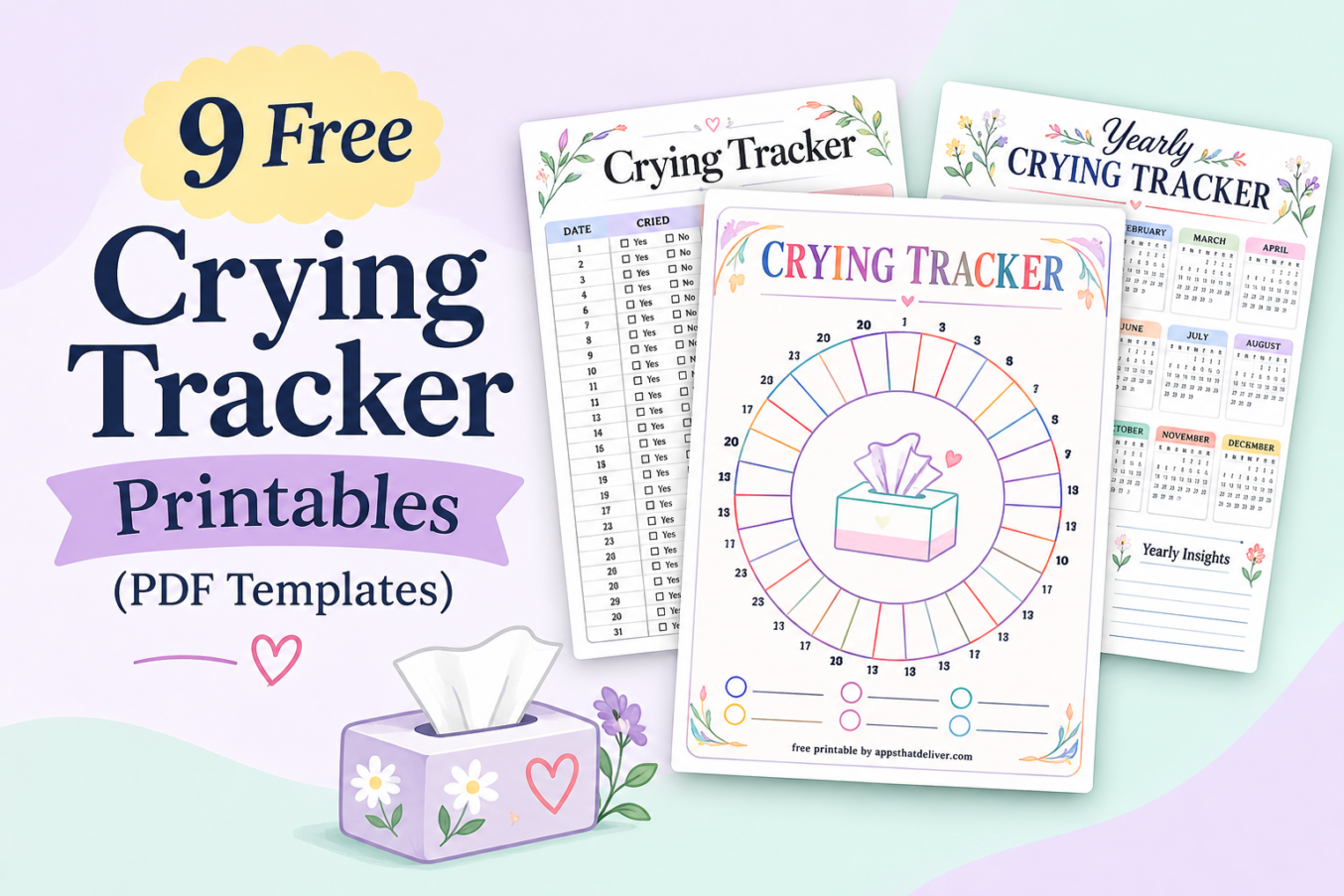

Some days, tears come easily. Other days, you might feel emotional without crying at all. Both experiences are completely normal, and sometimes it helps to have a quiet place to notice those feelings.
These free crying tracker printables offer a simple, creative way to record when you cry, how often it happens, and, if you want, what might have contributed to those moments.
This collection includes 9 different crying tracker designs, ranging from simple monthly checklists to colorful yearly trackers and reflection worksheets.
Whether you enjoy journaling, want to understand your emotional patterns, or simply like using creative tracking pages, you can choose a layout that feels comfortable and useful.
Free Crying Tracker Printables
Everyone experiences and expresses emotions differently. Some people prefer a simple yes-or-no crying log, while others want to record the intensity of their tears or write about what happened.
That’s why these printable crying trackers offer several ways to document your experiences.
- Yearly crying tracker with five crying intensity categories
- 31-day circular crying tracker with a simple legend
- Monthly crying log with yes/no checkboxes and reasons
- Yearly crying calendar with a customizable emotional key
- Colorful annual crying tracker with a simple two-category legend
- Monthly crying checklist with a large reason-writing section
- Yearly tear intensity tracker with five categories
- Yearly crying tracker with monthly calendars and reflection sections
- 31-day circular crying tracker with customizable categories
Each printable has a different layout, so you can choose between quick daily marking, detailed written reflection, or a broader overview of your emotional experiences throughout the year.
Why Use a Printable Crying Tracker?
A crying tracker is a personal journaling tool that helps you notice when you cry and, depending on the template, what you were experiencing at the time.
The purpose isn’t to judge your emotions or decide how often you should cry. Instead, it gives you a way to observe your experiences with curiosity and kindness.
- Notice emotional patterns. Look back at your entries to see whether certain situations, dates, or experiences appear repeatedly.
- Practice emotional awareness. Take a moment to recognize how you feel instead of automatically moving past it.
- Support your journaling routine. Use a simple tracker alongside a personal journal or reflection notebook.
- Record different experiences. Some templates distinguish between not crying, feeling tearful, crying briefly, and having a longer crying episode.
- Reflect over time. Monthly and yearly layouts make it easier to review your entries without reading through multiple journal pages.
Remember that crying is not automatically a sign that something is wrong. People cry for many reasons, including sadness, frustration, relief, happiness, and emotional overwhelm.
A tracker can help you reflect, but it cannot diagnose a mental health condition or measure your emotional well-being on its own.
How to Use a Crying Tracker Printable
Getting started is easy. You don’t need any special supplies beyond your chosen printable and something to write or color with.
- Choose your tracker. Pick a monthly, yearly, or circular design depending on how much detail you want to record.
- Download the PDF. Select the download button underneath your preferred printable.
- Print your worksheet. Print the tracker and keep it somewhere convenient, such as a journal, folder, or binder.
- Set up the legend. If your design includes a customizable key, assign meanings to the available colors or symbols.
- Record your experience. Mark the appropriate day whenever you want to document whether you cried or how the experience felt.
- Add notes if helpful. Use the reason or reflection sections to write about events, thoughts, or feelings connected to your entry.
- Review without judgment. Look for patterns over time, but avoid treating the number of crying days as a score or a measure of personal success.
You can fill in your tracker every evening, immediately after an emotional experience, or whenever you remember. There is no need to complete every box if tracking doesn’t feel helpful on a particular day.
9 Free Crying Tracker Printable PDF Templates
Below are all nine printable crying tracker designs. Each offers a different way to record emotional experiences, from simple daily checkboxes to detailed annual reflection pages.
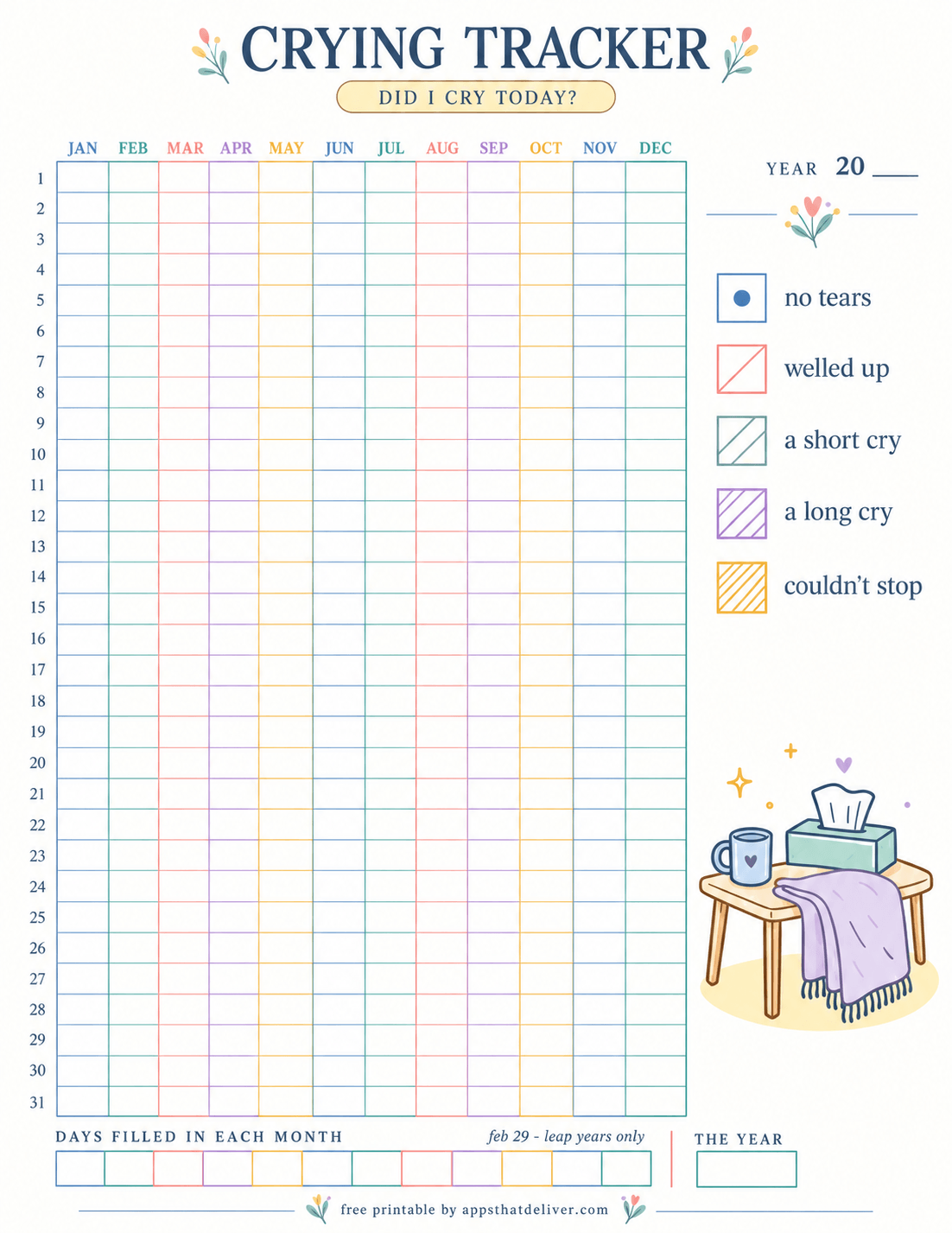
1. Yearly Crying Tracker with Five Crying Levels
This colorful yearly crying tracker printable is designed for anyone who wants to see their crying patterns across all twelve months on one page.
The main grid includes columns for January through December and numbered rows for days 1 through 31. Each small box represents a day in a particular month.
The legend provides five options: no tears, welled up, a short cry, a long cry, and couldn’t stop. Each category has its own symbol or pattern, allowing you to record different experiences without writing a long explanation.
At the bottom, you’ll find a section for counting the days filled in during each month, along with a space for the yearly total. The printable also includes a reminder that February 29 applies only to leap years.
Choose this design if you enjoy detailed tracking and want a compact visual overview of an entire year.
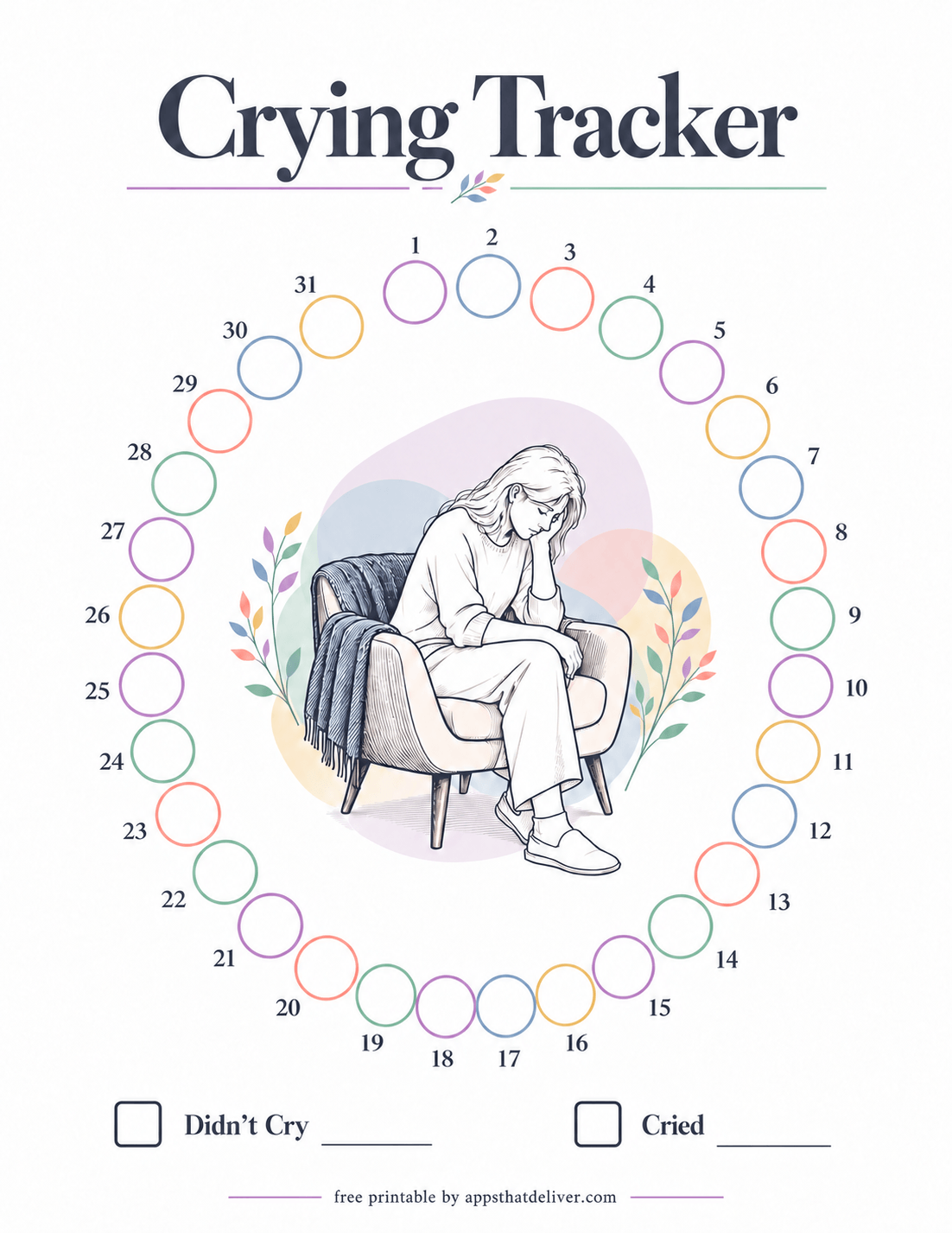
2. Circular 31-Day Crying Tracker
This elegant monthly crying tracker features a circular arrangement of 31 blank circles surrounding an illustration of a person sitting quietly in an armchair.
Each circle represents one day of the month. You can mark or color the corresponding circle as you complete your daily emotional check-in.
At the bottom are two legend options labeled Didn’t Cry and Cried, with blank spaces beside them for choosing your own colors or symbols.
The circular layout makes this design particularly appealing if you prefer a creative tracking page rather than a traditional calendar or table.
It’s a good choice for keeping a simple monthly record without needing to write down reasons or additional details.
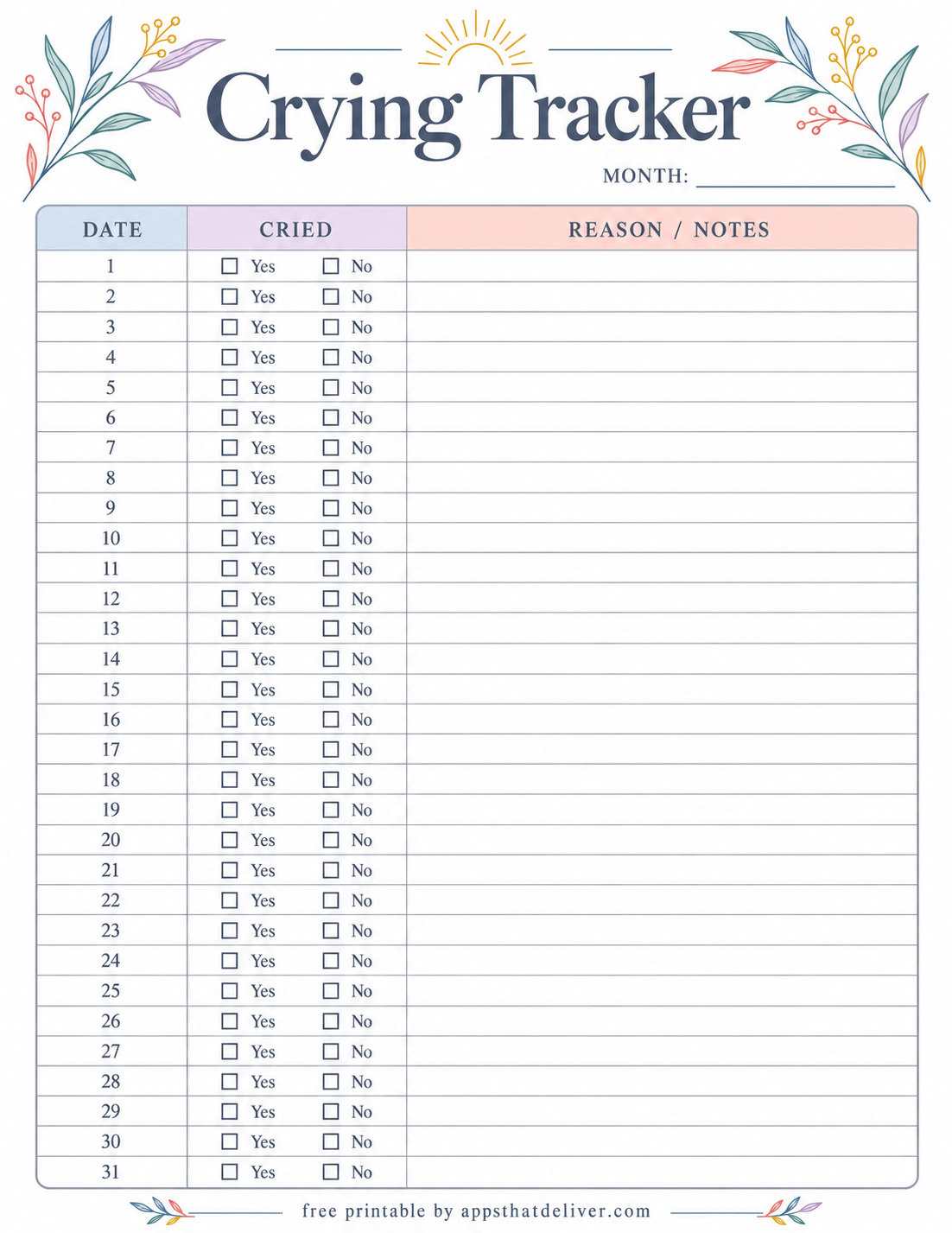
3. Monthly Crying Log with Reasons and Notes
If you want to record both whether you cried and what might have caused it, this monthly crying log provides a straightforward format.
The printable features a table with three main columns: Date, Cried, and Reason / Notes. All 31 dates are numbered, and each row includes separate Yes and No checkboxes.
The large notes column gives you space to describe an experience, record a possible trigger, or write a short reflection about how you were feeling.
A blank month field at the top lets you identify the period you’re tracking. Colorful botanical illustrations decorate the upper corners while keeping the main writing area simple and readable.
This design is especially useful if you want to understand the circumstances surrounding emotional moments rather than only count how often they happen.
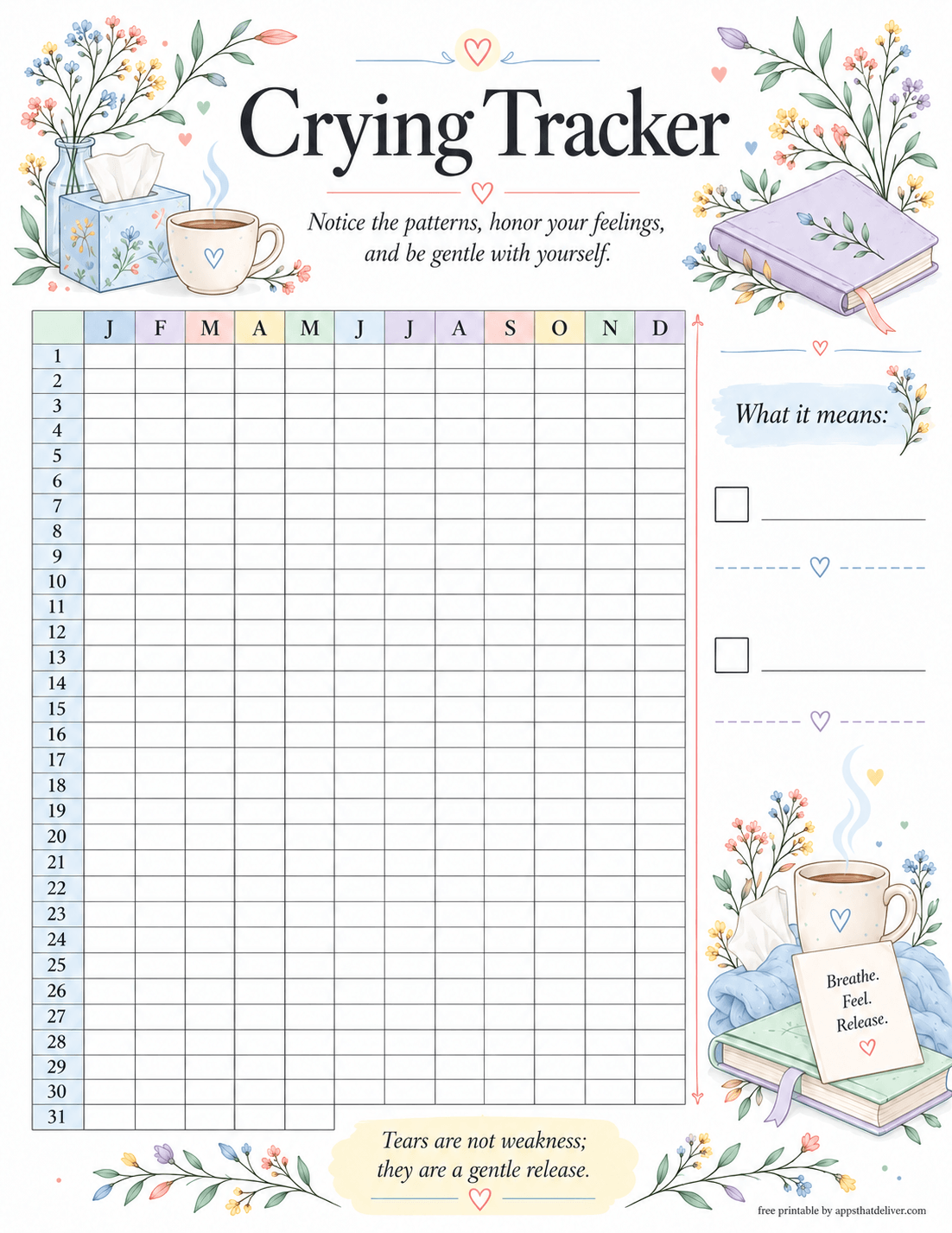
4. Yearly Crying Calendar with Customizable Legend
This beautifully illustrated yearly crying calendar printable combines a twelve-month tracking grid with gentle reminders about emotional awareness.
The main grid displays the months across the top and numbered days down the side. You can mark each box according to your own tracking system.
On the right, a section titled What it means includes three blank legend entries. You can decide what each symbol or color represents, making the tracker adaptable to your personal preferences.
The design also includes encouraging messages such as Notice the patterns, honor your feelings, and be gentle with yourself, along with floral illustrations, a warm drink, tissues, and journaling accessories.
Choose this tracker if you want a colorful yearly overview with a flexible key and a softer, journal-inspired appearance.
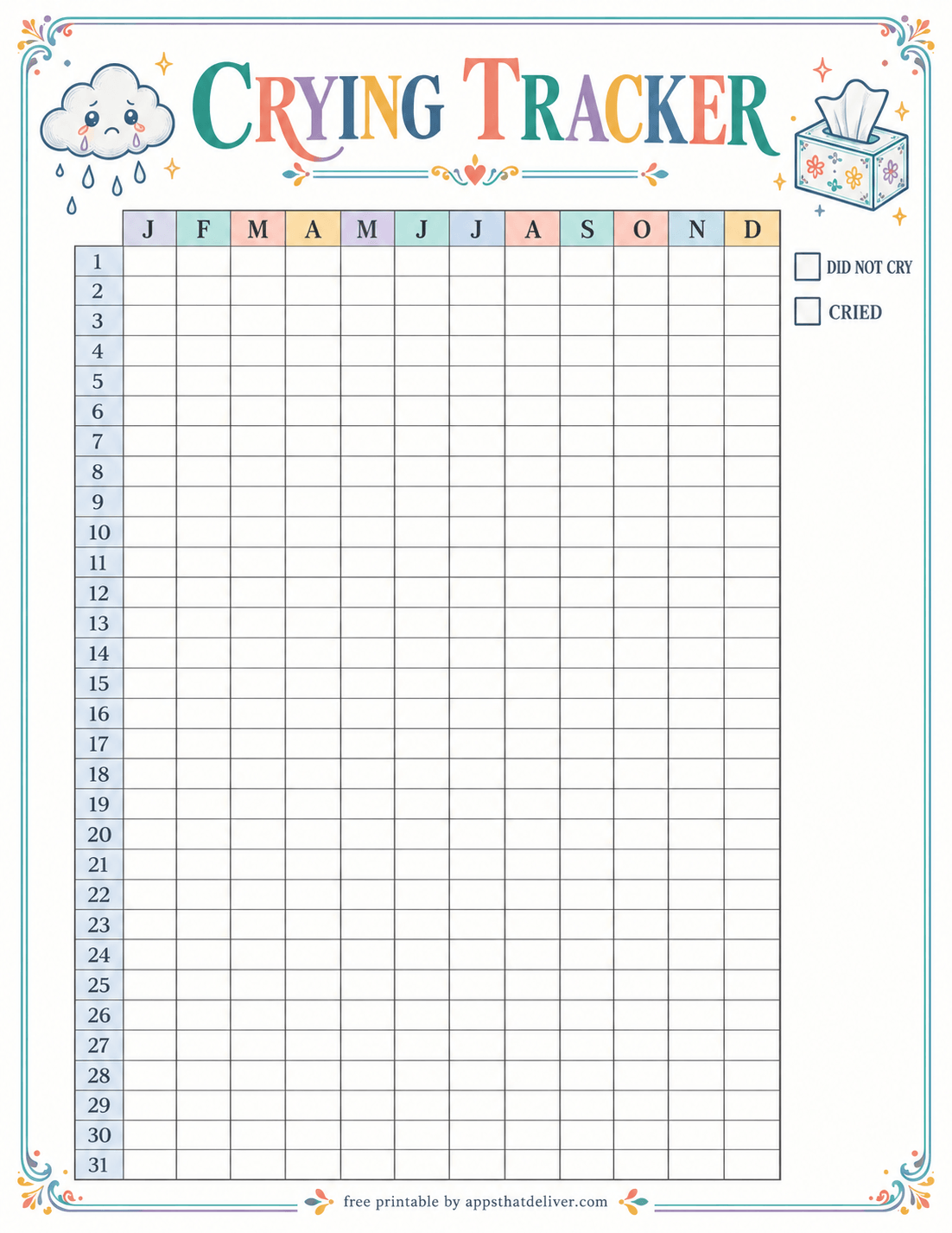
5. Colorful Yearly Crying Tracker with Simple Legend
This cheerful annual crying tracker printable offers a simple way to record crying days throughout the year.
The tracker includes a twelve-month grid with numbered rows for days 1 through 31. Each month has a colorful header, and the blank grid boxes can be marked as you go.
Beside the grid is a two-category legend labeled Did Not Cry and Cried. This makes the template easy to use if you prefer a straightforward yes-or-no approach.
The playful design features a small crying cloud, a decorative tissue box, multicolored lettering, and a colorful border.
It’s a good option for anyone who wants a full-year tracker that is visually engaging but doesn’t require detailed daily notes.
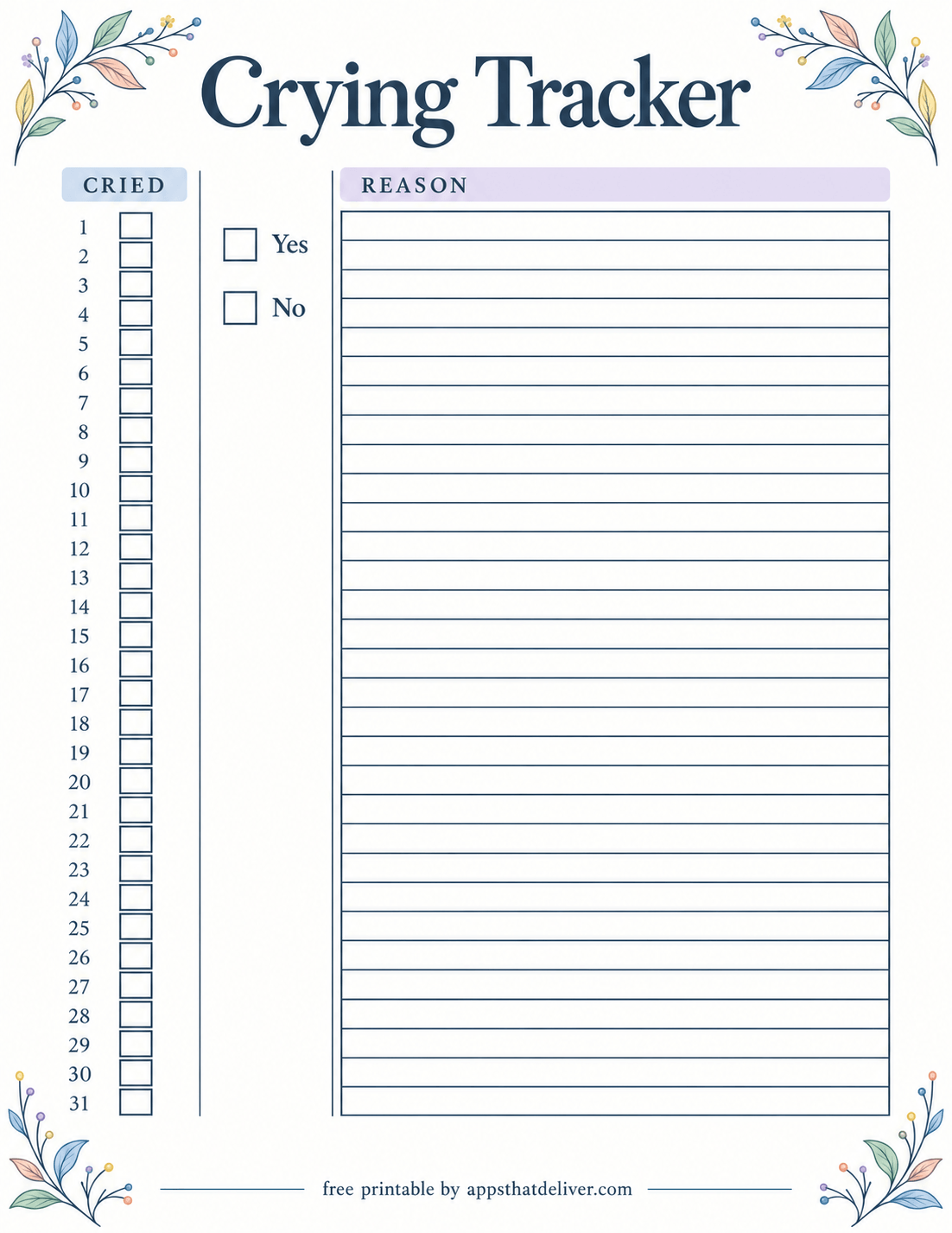
6. Monthly Crying Checklist with Reason Journal
This monthly crying tracker worksheet is ideal for anyone who wants a simple checklist alongside a generous space for writing.
The left side contains a vertical list of dates from 1 through 31, with an empty checkbox beside each number.
Next to the date column are separate Yes and No checkboxes, while the right side provides a large lined section labeled Reason.
You can use the checkboxes to mark crying days and the writing lines to describe emotions, situations, or thoughts that you want to remember.
The layout has a clean, organized appearance with a dark blue title, soft pastel accents, and botanical corner illustrations.
Choose this printable if you prefer a more journal-focused approach with plenty of room for personal reflection.
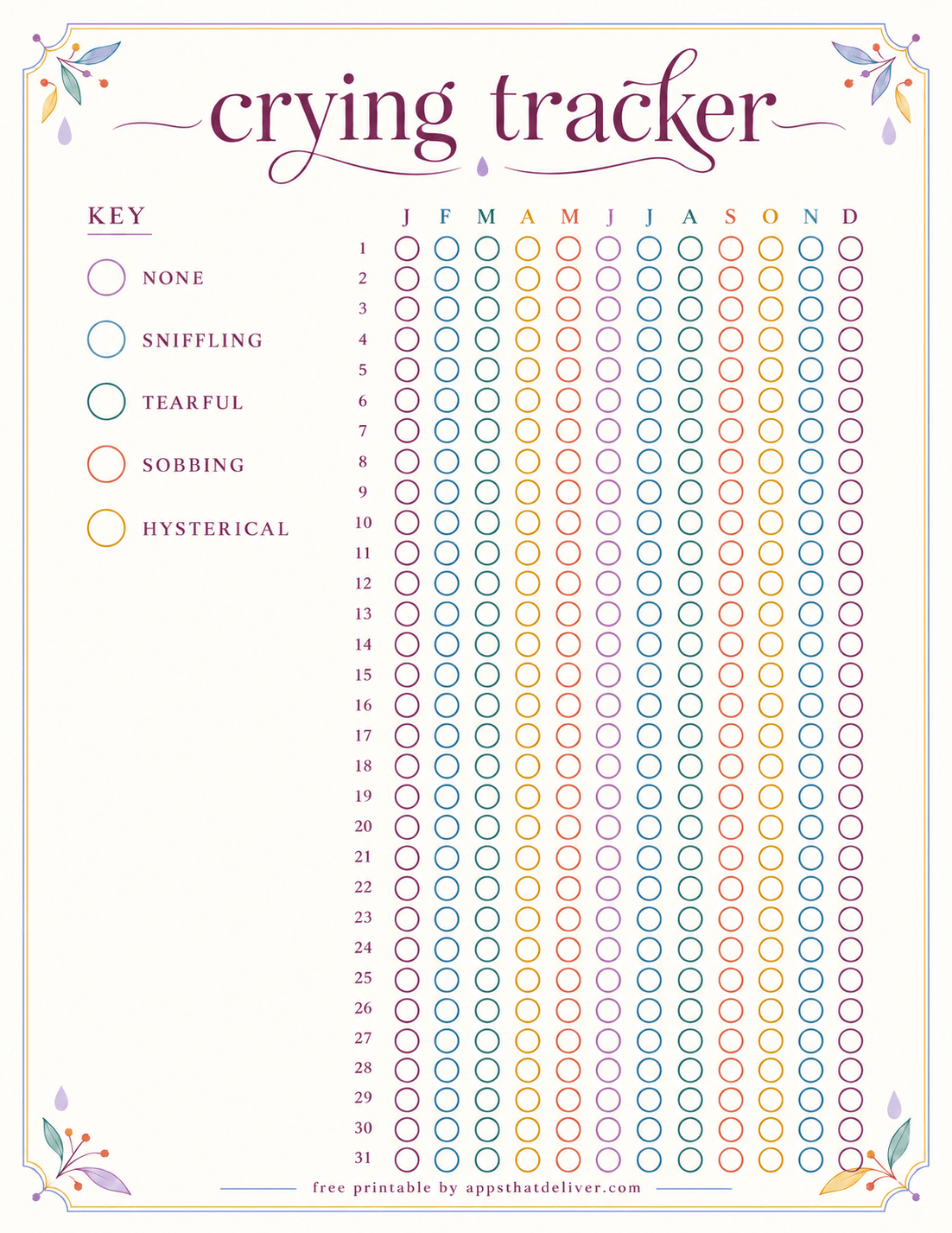
7. Yearly Tear Intensity Tracker with Color-Coded Circles
This elegant yearly tear tracker uses small outlined circles instead of traditional square calendar boxes.
The grid covers all twelve months, with 31 numbered rows for recording your daily experiences. Each month has its own colorful column of blank circles.
A key on the left lists five emotional intensity categories: None, Sniffling, Tearful, Sobbing, and Hysterical.
You can use the legend to decide how to mark each day’s circle and create a visual record of the different crying experiences you choose to track.
The printable also features a decorative border, colorful botanical accents, and an elegant script-style heading.
This is a useful choice if you want a compact annual overview with more categories than a basic cried-or-didn’t-cry tracker.
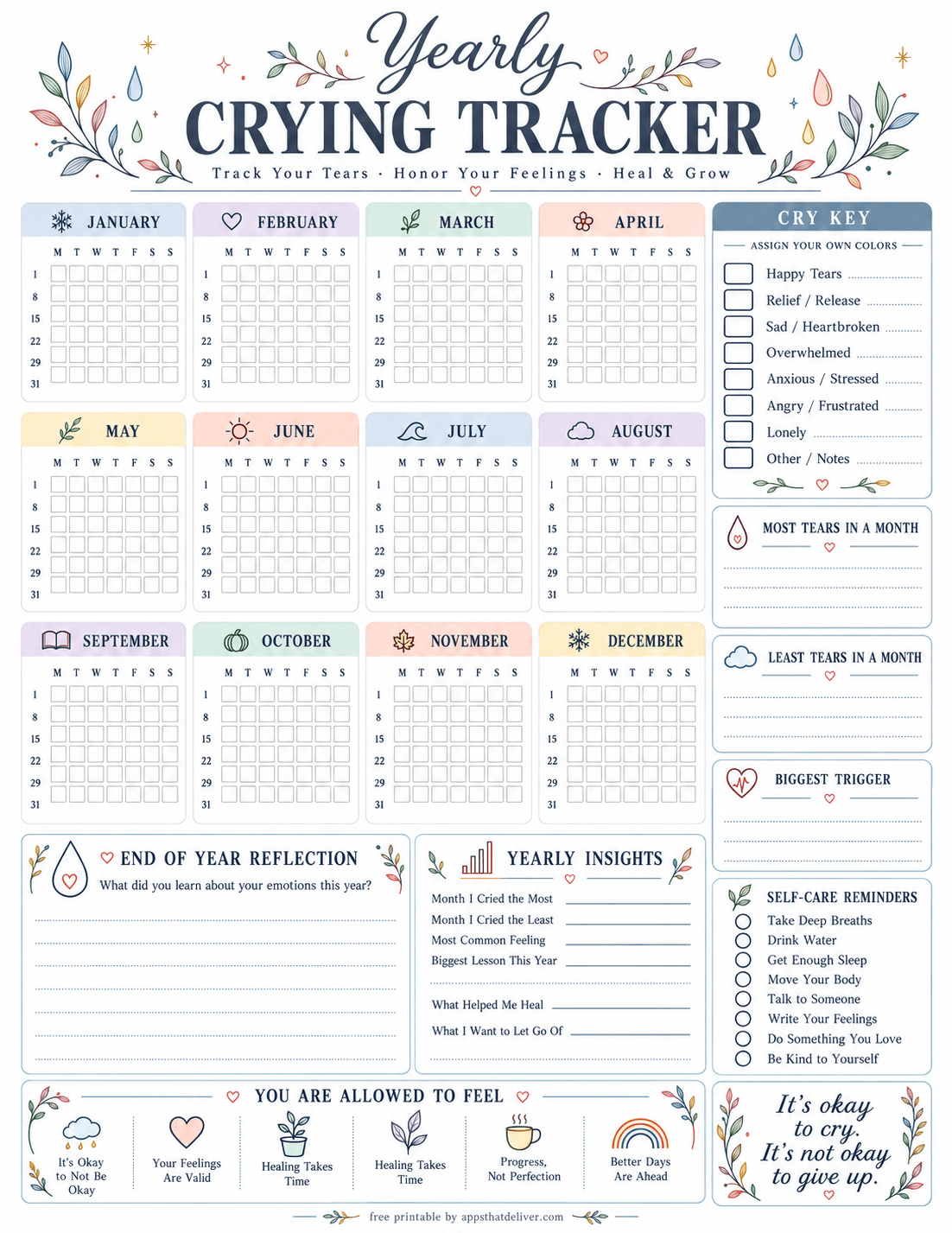
8. Yearly Crying Tracker with Emotional Reflection Sections
This detailed yearly crying tracker printable combines daily emotional tracking with personal reflection and self-care reminders.
Unlike the other yearly grid designs, this template divides the year into twelve separate monthly calendar-style sections. Each month includes small blank boxes for recording your experiences.
The Cry Key section allows you to assign your own colors to categories such as Happy Tears, Relief / Release, Sad / Heartbroken, Overwhelmed, Anxious / Stressed, Angry / Frustrated, Lonely, and Other / Notes.
Additional sections help you reflect on the month with the most tears, the month with the least tears, and your biggest emotional trigger.
The bottom portion includes an End of Year Reflection, a Yearly Insights section, and a self-care reminder checklist with suggestions such as taking deep breaths, drinking water, getting enough sleep, and talking to someone.
Encouraging messages and colorful botanical decorations give the worksheet a gentle, supportive appearance.
Choose this design if you enjoy combining habit-style tracking with journaling and want a dedicated place to reflect on your emotional experiences throughout the year.
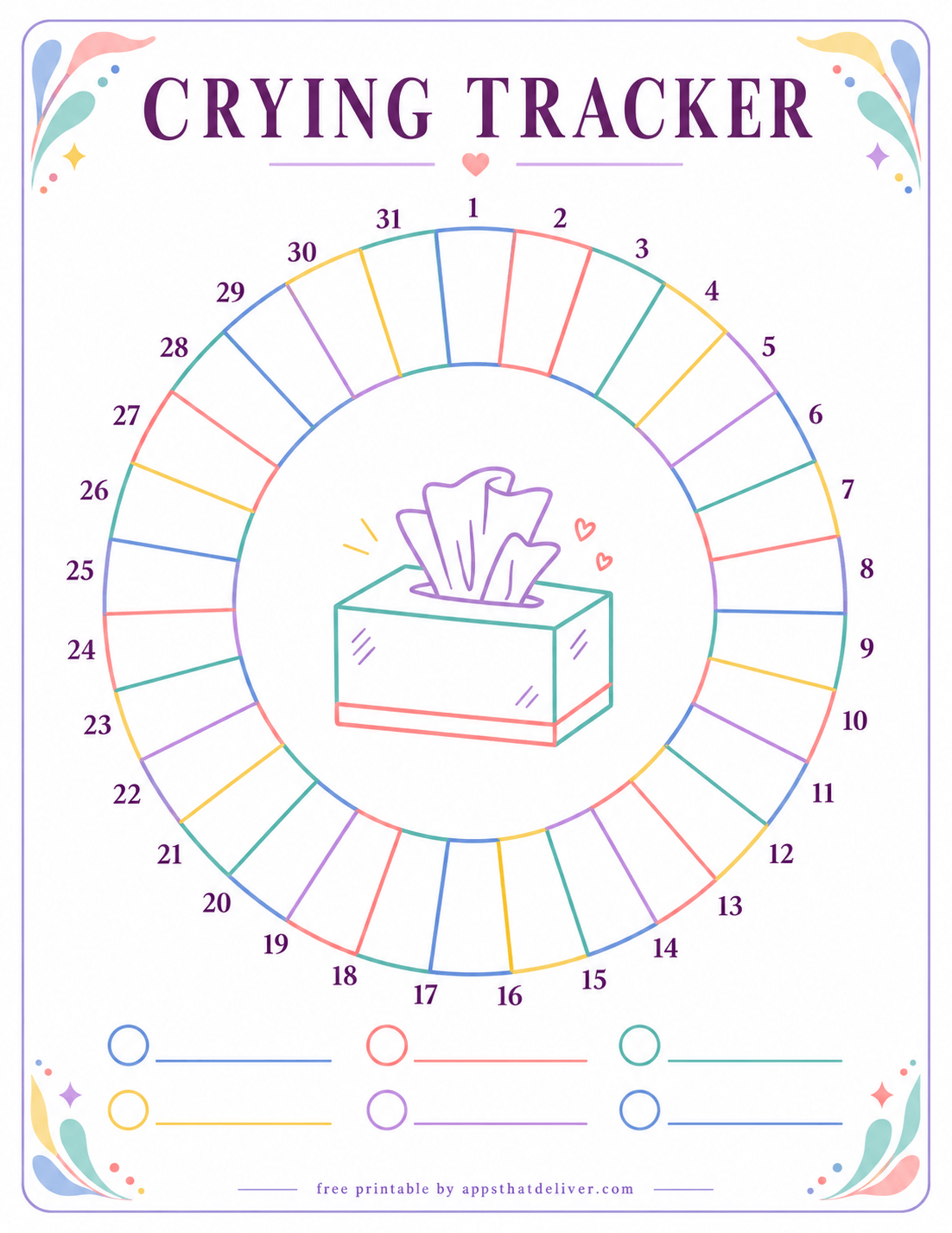
9. Circular Crying Tracker with Customizable Color Key
This bright and playful 31-day crying tracker printable features a large circular tracking wheel with a tissue box illustration in the center.
The wheel is divided into 31 numbered sections, with one space for each day of the month. You can color or mark each section to represent your experience on that day.
Below the wheel are six blank legend entries with colorful outlined circles and writing lines. These let you create your own tracking categories rather than following a predefined system.
For example, you could use the categories to distinguish different emotions, crying experiences, or personal observations that matter to you.
The colorful wheel, pastel decorative accents, and central tissue illustration make this design especially appealing for creative journaling.
It’s a great option if you want a monthly crying tracker that feels more like a coloring activity than a traditional checklist.
Which Crying Tracker Printable Should You Choose?
With nine different layouts available, the best choice depends on how much detail you want to record and whether you prefer a monthly or yearly overview.
- For tracking an entire year: Choose Printable 1, 4, 5, or 7 for a twelve-month overview on one page.
- For simple daily tracking: Printable 2 or 5 uses an easy cried-or-didn’t-cry approach.
- For recording reasons and triggers: Printable 3 or 6 provides writing space for notes about your experiences.
- For tracking different crying intensities: Printable 1 or 7 includes five predefined categories.
- For emotional reflection and self-care: Printable 8 combines yearly tracking with journaling prompts and self-care reminders.
- For creative coloring: Printable 9 features a circular wheel with six customizable legend entries.
- For a personalized tracking system: Printable 4 or 9 allows you to decide what the colors or symbols mean.
You don’t have to commit to one design forever. You might use a simple monthly tracker during busy periods and switch to a more detailed journal-style worksheet when you feel like reflecting.
Monthly vs. Yearly Crying Trackers
Both monthly and yearly crying trackers can be useful, but they offer different ways to look at your experiences.
Monthly Crying Trackers
A monthly crying tracker focuses on a shorter period, usually with 31 numbered spaces or rows.
These templates are helpful when you want to build a simple daily check-in routine or record notes about specific experiences.
The monthly designs in this collection include circular trackers, yes-or-no checklists, and lined worksheets for recording reasons.
Yearly Crying Trackers
A yearly crying tracker provides a broader view of your experiences across twelve months.
Instead of focusing on a single event, you can look back at the completed page to notice how your entries vary throughout the year.
Some yearly designs use one large grid, while others divide the year into separate monthly sections. Printable 8 also includes spaces for written reflection.
If you want detailed notes, a monthly tracker may be easier to maintain. If you enjoy seeing a whole year on one page, a yearly design may be more appealing.
Ideas for Creating Your Own Crying Tracker Key
Several designs include blank legend spaces so you can decide what different colors or symbols represent.
There isn’t one correct way to organize your categories. You can make your tracker as simple or detailed as you like.
Track Whether You Cried
The simplest option is to use two categories: cried and didn’t cry.
This approach works well when you want a quick daily check-in without recording additional information.
Track Different Emotional Experiences
If you’re interested in the feelings surrounding crying, you can assign different colors to experiences such as sadness, relief, happiness, frustration, or feeling overwhelmed.
You might also include a category for mixed emotions or days when you’re unsure how to describe what you felt.
Track Crying Duration or Intensity
Another option is to distinguish between feeling tearful, having a brief cry, and experiencing a longer crying episode.
Printables 1 and 7 already include predefined categories for this purpose, while the customizable designs let you create your own descriptions.
Whichever approach you choose, use labels that feel comfortable and meaningful to you. You can change your tracking system whenever your needs change.
Tips for Using a Crying Tracker with Your Journal
A crying tracker can work as a standalone worksheet, but you can also combine it with a personal journal for more detailed reflection.
- Keep entries simple. A few words about how you felt may be enough. You don’t need to write a long explanation every day.
- Notice what happened beforehand. If you want to explore possible triggers, write down any events or thoughts that stood out.
- Include positive emotions. Tears can accompany happiness, relief, gratitude, and other experiences, not just sadness.
- Reflect on what helped. You might record whether rest, conversation, journaling, or another activity felt supportive afterward.
- Respect your privacy. Keep completed worksheets somewhere you feel comfortable storing personal reflections.
- Skip days when needed. Tracking is optional, and you don’t need to fill every space for the worksheet to be useful.
If you notice that tracking makes you feel more anxious, self-critical, or preoccupied with crying, it’s okay to stop using the worksheet.
If crying or emotional distress is persistent, overwhelming, or interfering with everyday life, consider speaking with a qualified mental health professional for personalized support.
How to Print and Organize Your Crying Tracker Pages
Once you’ve chosen your favorite crying tracker design, download its PDF using the button below the corresponding preview.
Open the file in your preferred PDF viewer, select your printer, and check the print preview before printing. If the design doesn’t fit correctly, review the paper size and scaling settings.
You can use colored pencils, markers, or pens to fill in the boxes and circles. For trackers with small spaces, fine-tip pens or pencils may be easier to use.
Monthly pages can be stored in a binder or folder, while yearly trackers can be kept with your journal or other personal reflection worksheets.
If you prefer to track privately, consider keeping the completed pages in a personal notebook or another secure location.
Frequently Asked Questions
A crying tracker printable is a worksheet for recording crying experiences over time. Depending on the design, you can mark whether you cried, describe the intensity, or write notes about possible reasons and emotions.
Yes. This collection includes nine free crying tracker designs intended for PDF download and printing.
There are nine unique designs, including monthly crying logs, yearly tracking grids, circular trackers, and a detailed yearly reflection worksheet.
Yes. Printables 1, 4, 5, 7, and 8 are designed for tracking experiences across twelve months. The other designs focus on a 31-day period.
Printables 3 and 6 include dedicated writing areas for recording reasons or notes. Printable 8 also includes several sections for emotional reflection and yearly insights.
Yes. Printables 4 and 9 include blank legend spaces for assigning your own meanings to colors or symbols. Printable 8 also includes a section for assigning colors to emotional categories.
No. You can use the tracker whenever it feels helpful. Missing a day or choosing not to record an experience does not mean you’ve used the worksheet incorrectly.
A crying tracker may help you notice patterns and reflect on your experiences. However, it is a personal journaling tool, not a diagnostic test or a substitute for professional mental health support.
You can record what happened before you cried, how you felt, what you were thinking, or what helped afterward. You can also leave the section blank if you prefer not to write about an experience.
Printable 2 offers a 31-day circular tracker with cried and didn’t cry options. Printable 5 provides a similar two-category approach across the entire year.
Final Thoughts
Understanding your emotions doesn’t have to involve a complicated journaling routine. Sometimes, a simple printable worksheet can give you a convenient way to notice and reflect on your experiences.
This collection includes 9 free crying tracker printables, with options for monthly check-ins, yearly overviews, crying intensity tracking, customizable color keys, and written reflection.
Choose the design that feels most comfortable, download the corresponding PDF, and use it in whatever way supports your personal journaling routine.
Most importantly, remember that there is no right or wrong amount to cry. Your feelings deserve compassion, whether you record them on a tracker or simply allow yourself to experience them.
Be gentle with yourself. ❤️