

Try explaining money to a six-year-old sometime. It’s not exactly a thrilling conversation.
But kids pick up budgeting way faster than most parents expect—mine started tracking allowance around age six, and I still remember my daughter refusing to spend a single dollar of her “toy fund” for three straight weeks because she wanted to watch the number get bigger.
That’s when it clicked for her, not because I explained interest or anything, just because she could see it.
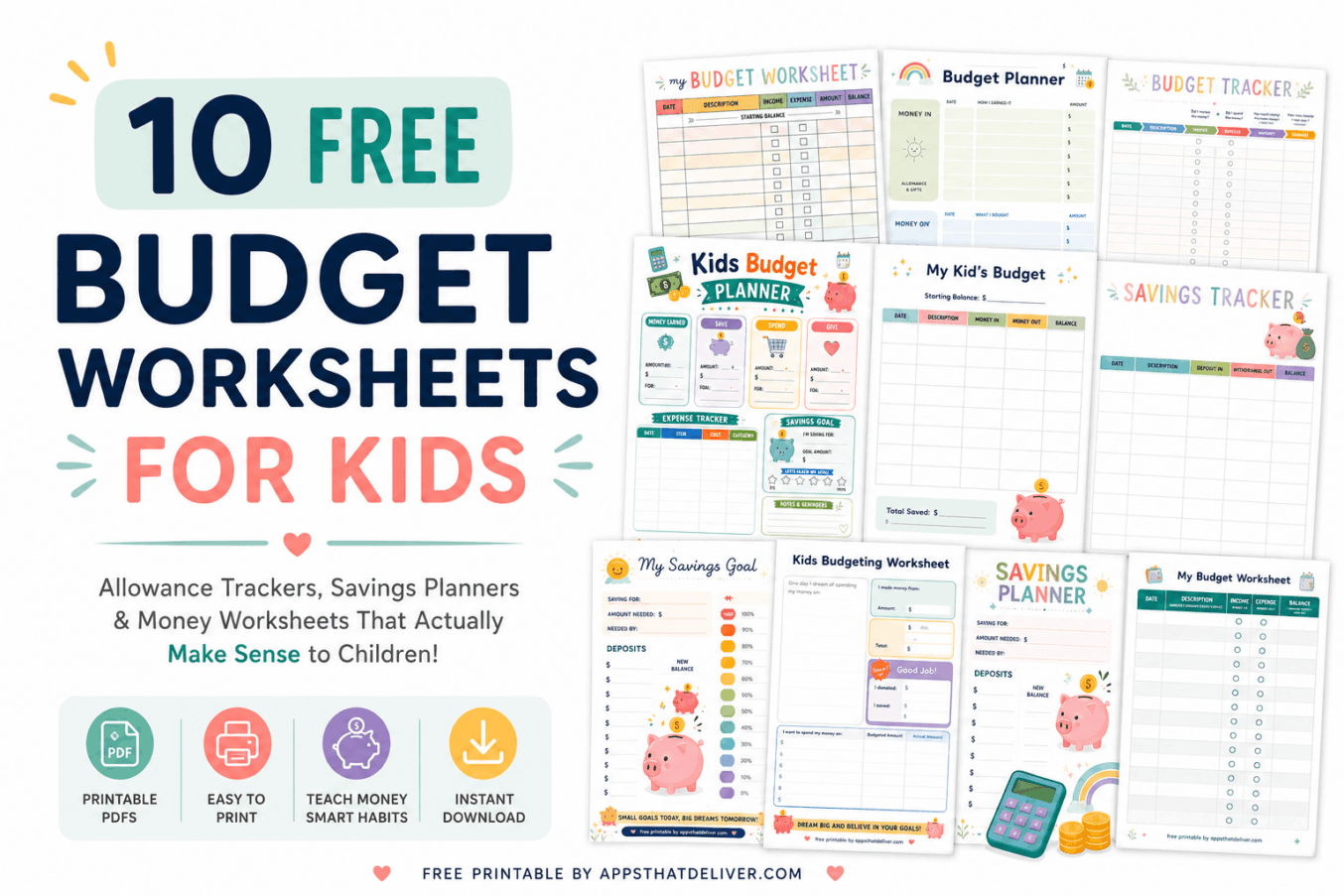
So I put together 10 printable budget worksheets for kids. Nothing fancy, no app, no login. Just sheets you print out and hand over.
Some are for younger kids with big colorful boxes to fill in. Some are stripped down for tweens who’d rather die than use anything with cartoon stars on it. Pick whatever fits your kid.
What’s Actually in Here
I tried to cover the stuff families actually deal with, not just theoretical budgeting categories nobody uses:
- Allowance trackers
- Kids budget planners
- Savings goal trackers
- Spending trackers
- Chore money logs
- A plain, no-frills budget worksheet
- Savings deposit/withdrawal records
- Save-Spend-Share worksheets
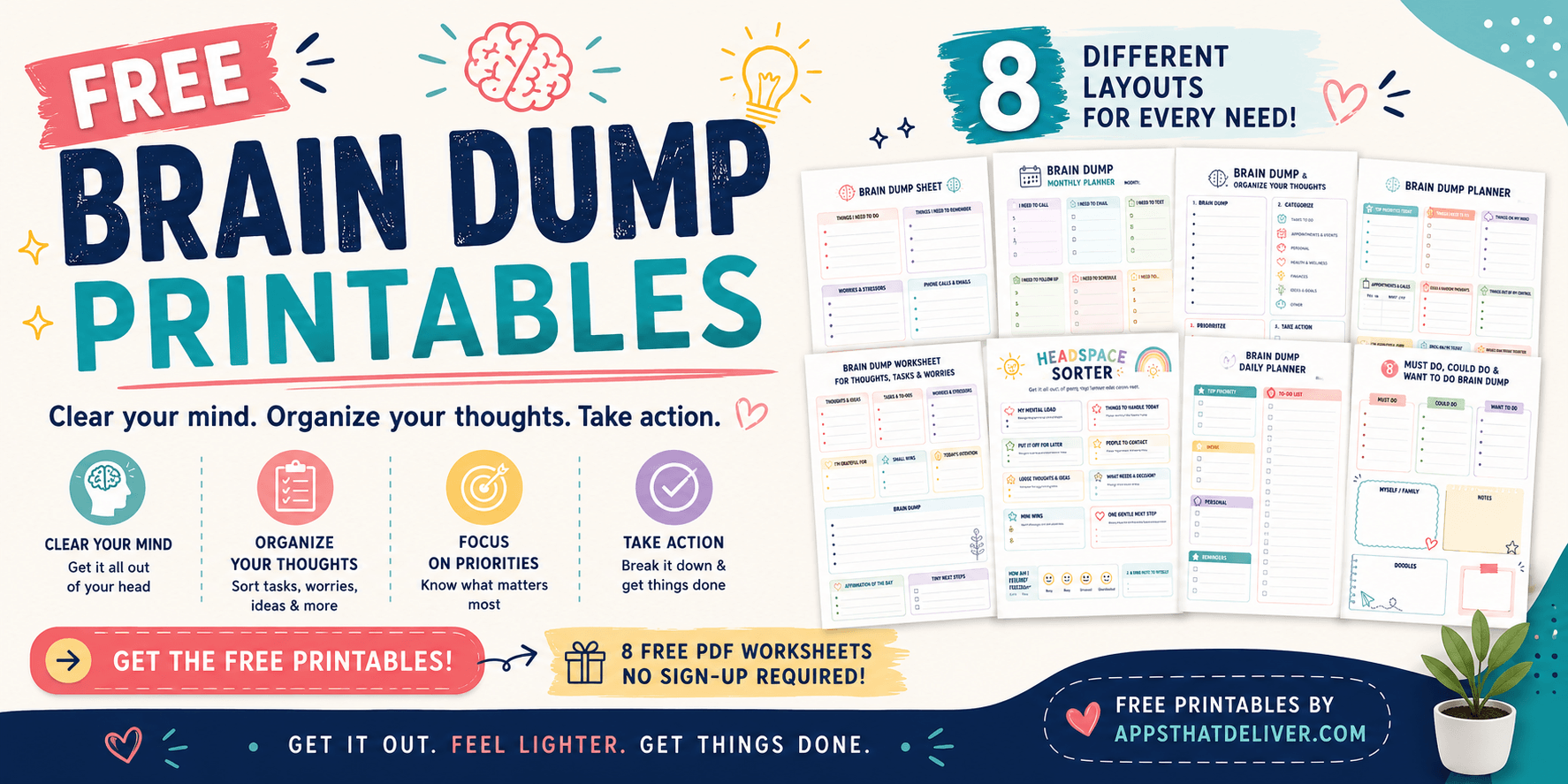
All blank, all reusable. Print one, use it up, print another.
10 Free Budget Worksheets for Kids
1. My Kid’s Budget Worksheet
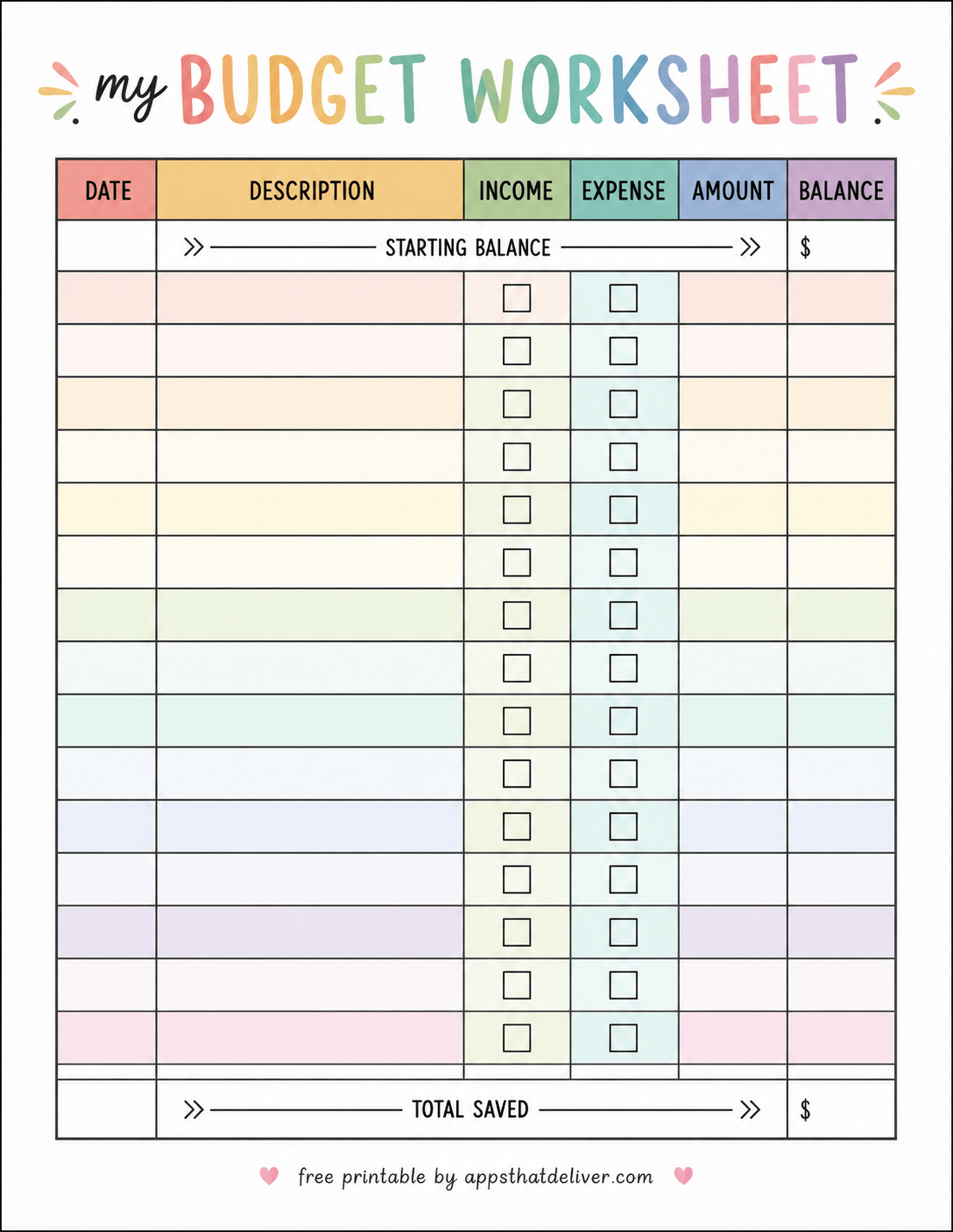
This was the first one I made, back when my oldest got her first allowance. Nothing complicated—date, what the money was for, money in, money out, running balance. Starting balance up top, total saved at the bottom.
The running balance is the part that matters. It’s the difference between “I have some money” and actually watching a number grow or shrink because of a choice you made five minutes ago.
Good for: first-time budgeters, weekly allowance, kids who get lost when there are too many boxes on a page
2. Colorful Budget Tracker for Kids
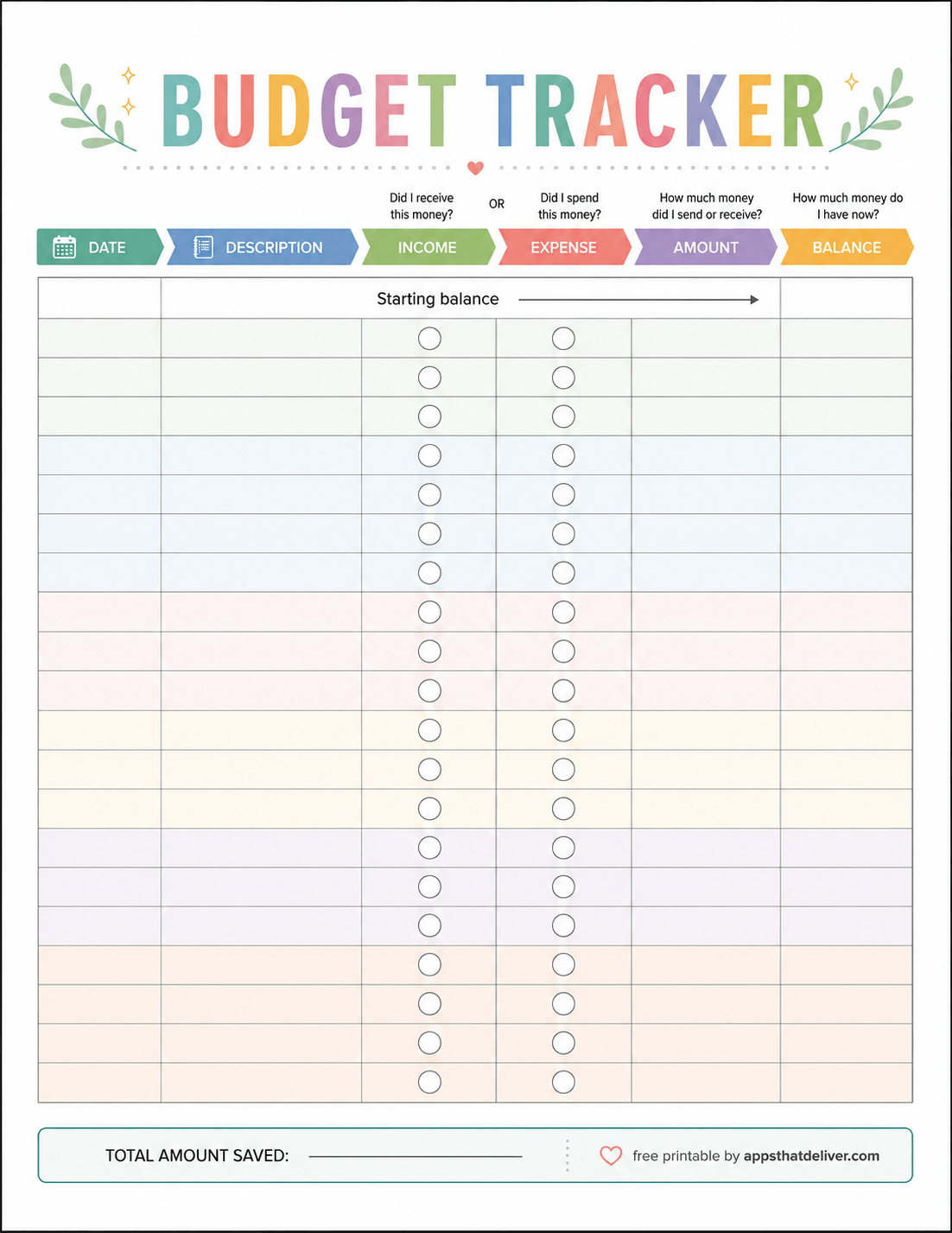
Some kids just need more visual stuff going on or they zone out. This one uses checkboxes instead of writing “income” or “expense” every single line, which sounds small but it actually keeps younger kids engaged a lot longer.
It’s also just easier to flip back through later and see the pattern—allowance day, then a string of expense boxes checked off over the next few days.
Good for: visual learners, spotting spending patterns, keeping younger kids engaged
3. Kids Budget Planner (the popular one)
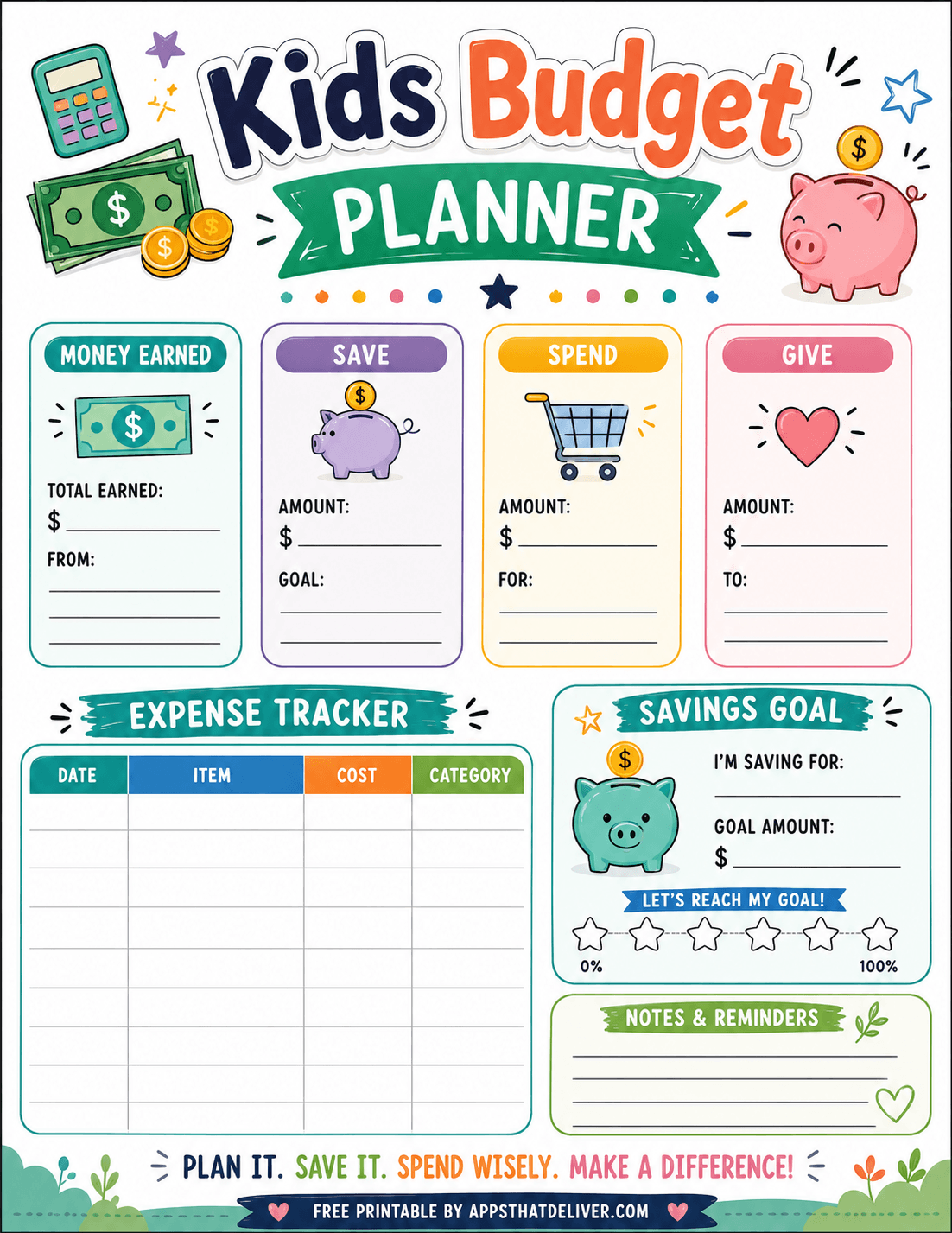
This is the one my kids reach for the most, honestly. Bright, a bit illustrated, and split into categories that actually mean something to a kid: money earned, savings, spending, giving, and a notes section for whatever random thing they want to write down.
The giving section was something I insisted on including. Even a dollar toward something—an animal shelter, a church offering, whatever the family does—teaches a habit that’s genuinely hard to build later in life if it isn’t there early.
Good for: allowance and chore money, birthday cash, teaching “save, spend, give,” homeschool money lessons
4. Simple Spending Tracker
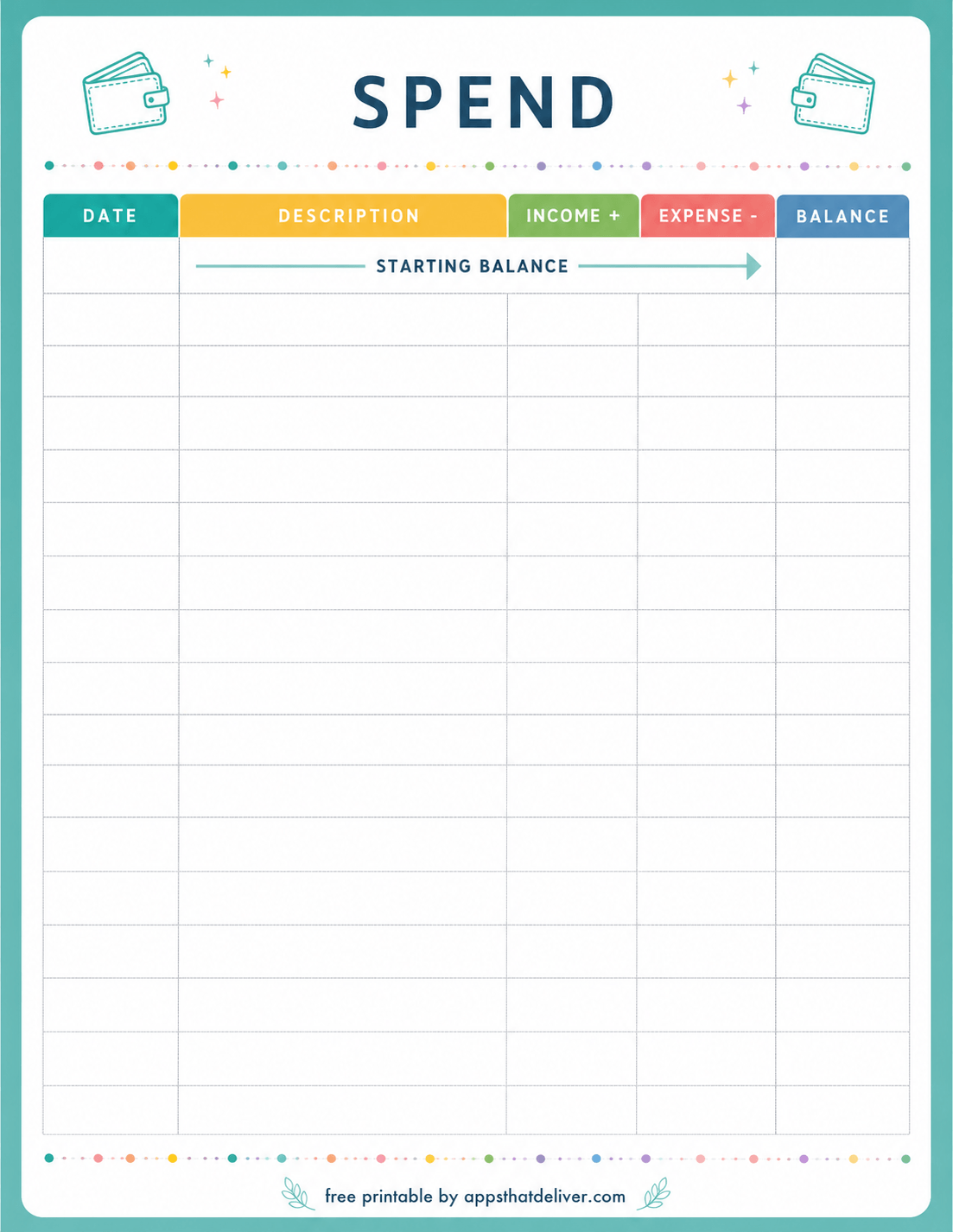
Sometimes you don’t need the whole budget system, you just need to know where the money went. (Adults need this one too, not gonna lie.)
Date, what they bought, income, expense, balance. That’s the entire sheet.
This one’s good for the kid who has their allowance spent within two days and then genuinely can’t remember what happened to it. Writing it down makes it real in a way that just handing over cash doesn’t.
Good for: cash budgets, impulse spenders, keeping it dead simple
5. Savings Goal Tracker for Kids
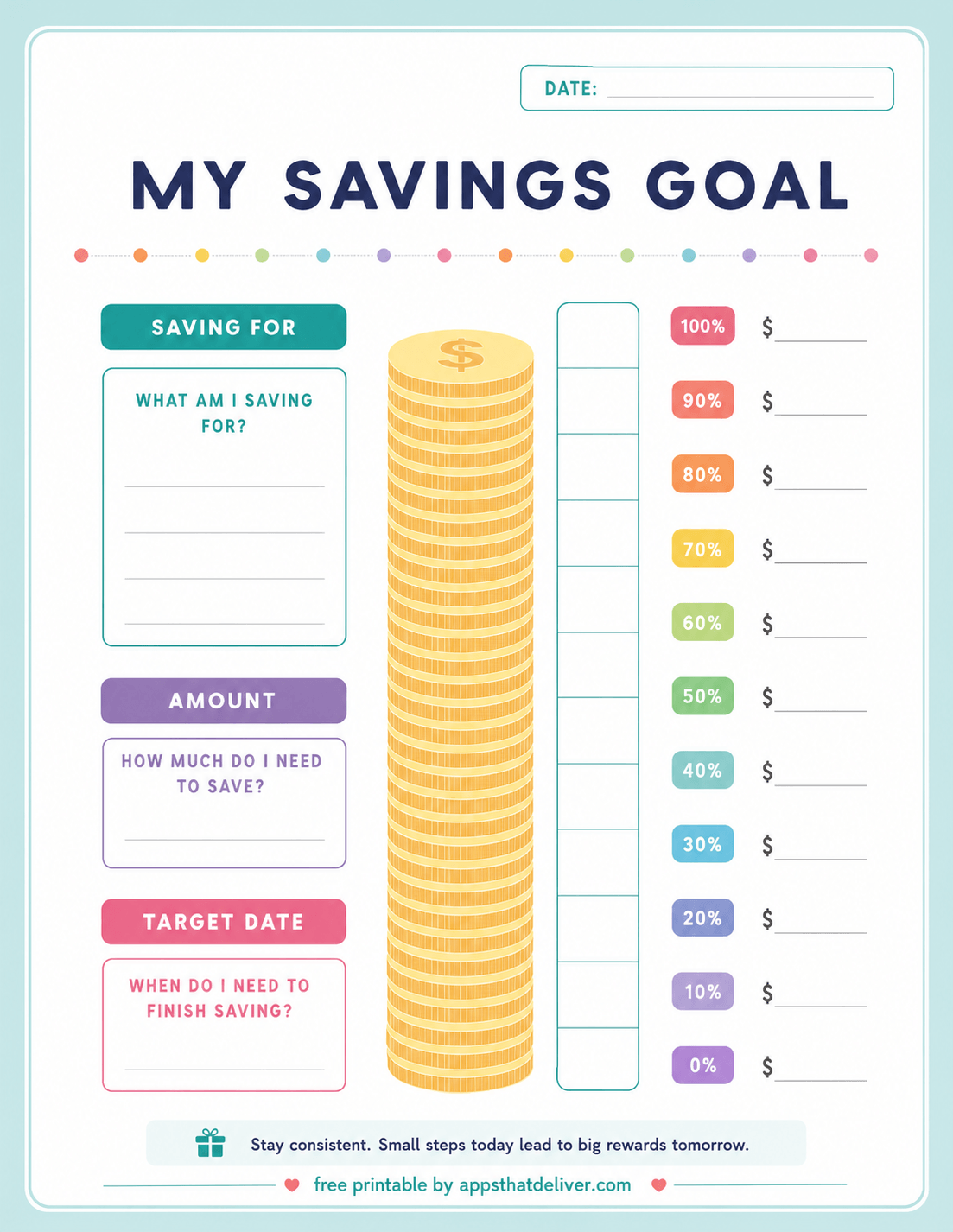
Saving up is brutal when you’re eight and the toy is sitting right there on the shelf. This tracker at least makes the waiting feel like progress instead of just… waiting.
What they’re saving for, how much they need, when they want it by, and milestone markers at 25%, 50%, 75%—plus a little progress bar to color in.
We’ve used this for a video game, a family vacation fund, one memorable Beyblade phase. The progress bar does more heavy lifting than you’d think.
Good for: bigger purchases, teaching patience, visual kids
6. Kids Savings Tracker
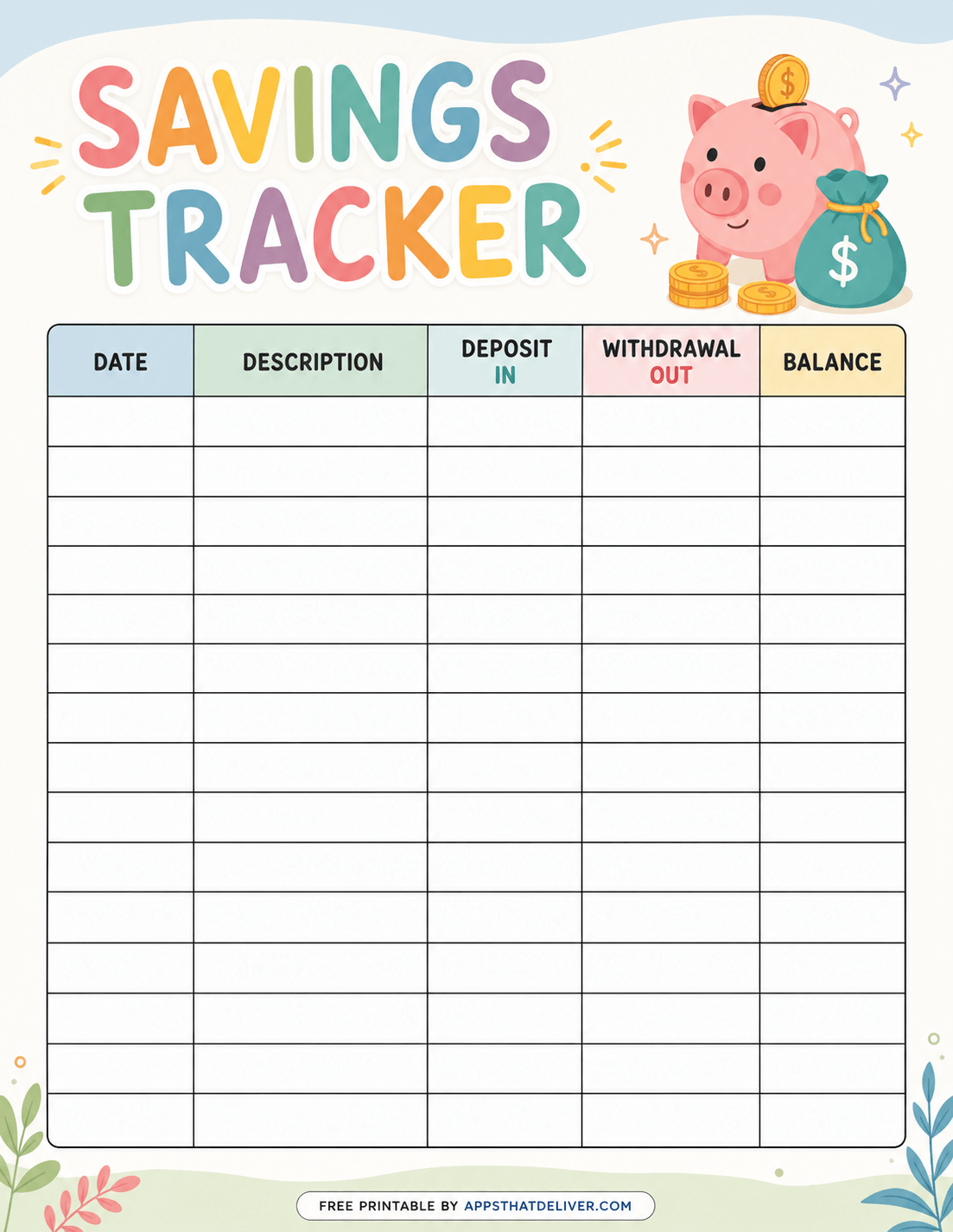
Basically an old-school passbook register, if anyone remembers those. Deposit date, what the money was from, amount in, amount out, new balance.
Works with a piggy bank, a savings jar, or an actual kids’ bank account. No app, no login—pencil and paper.
Good for: piggy banks, savings jars, kids with their own bank account
7. Savings Planner Printable
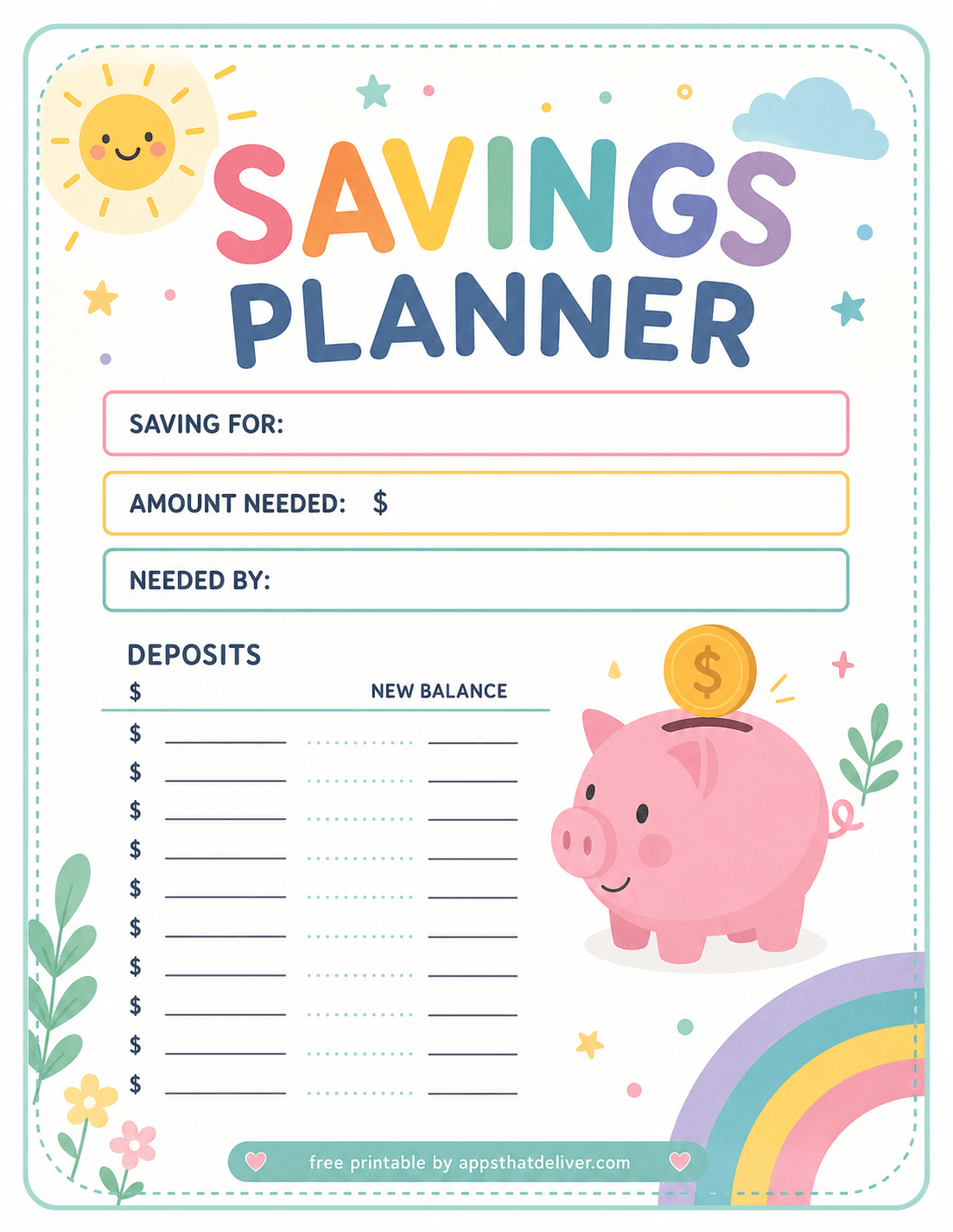
Goal-setting plus a running deposit log, all in one sheet. Kids write the goal, the amount needed, the deadline, then log every deposit as it happens.
If your family ever does a summer savings challenge—save $100 by August, that sort of thing—this keeps everyone tracking the same way.
Good for: summer savings challenges, structured goals
8. Kids Budgeting Worksheet
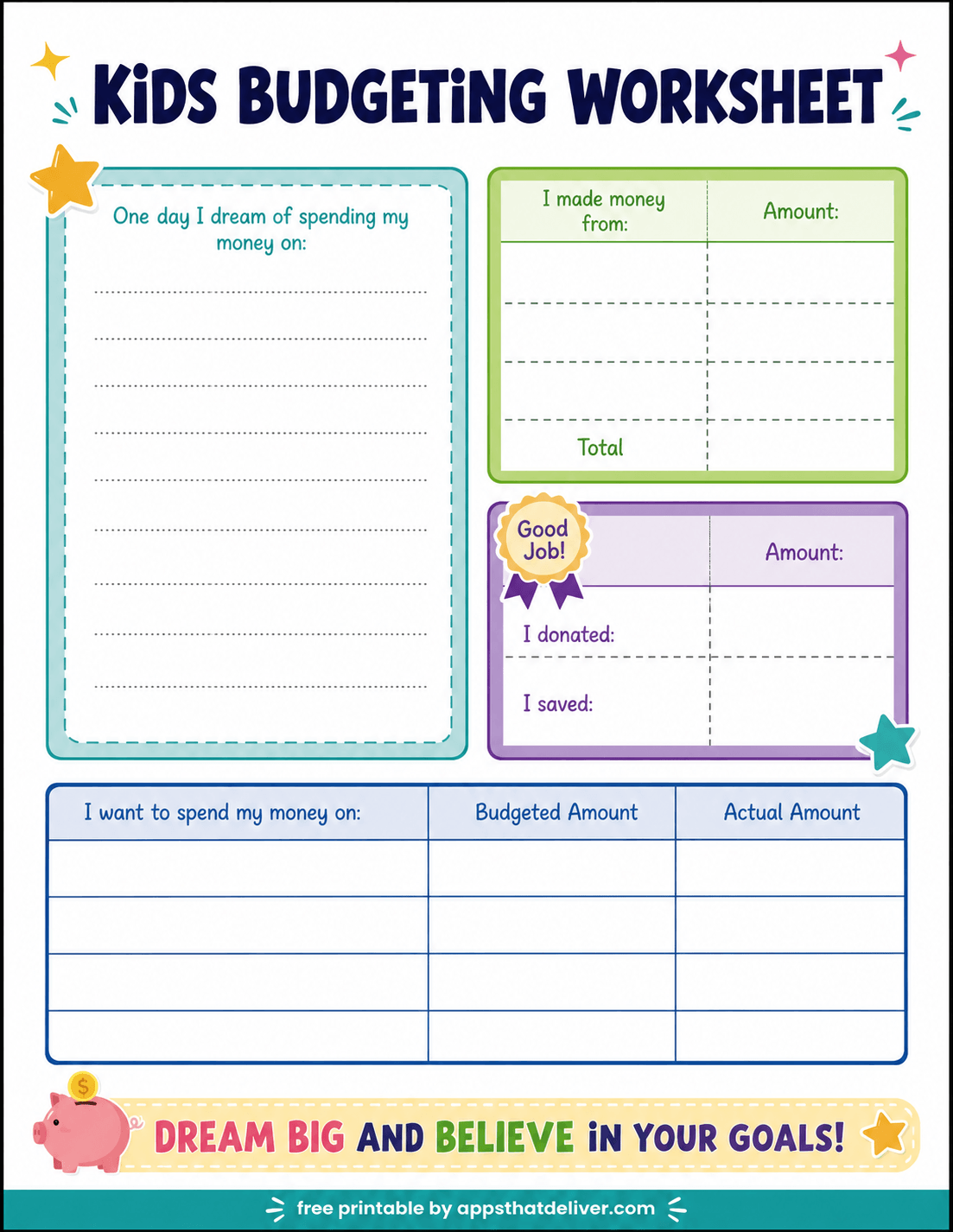
This one’s meant to slow a kid down for thirty seconds before they buy something on impulse. They write down what they want, how much money they actually have, how much they’ll give or share, how much they’ll save, and then what they actually ended up spending.
That last gap—between what they planned and what actually happened—is where most of the real learning shows up. It’s a little uncomfortable for them sometimes, which is kind of the point.
Good for: curbing impulse spending, older elementary kids
9. Kids Budget Planner Worksheet (three-bucket version)
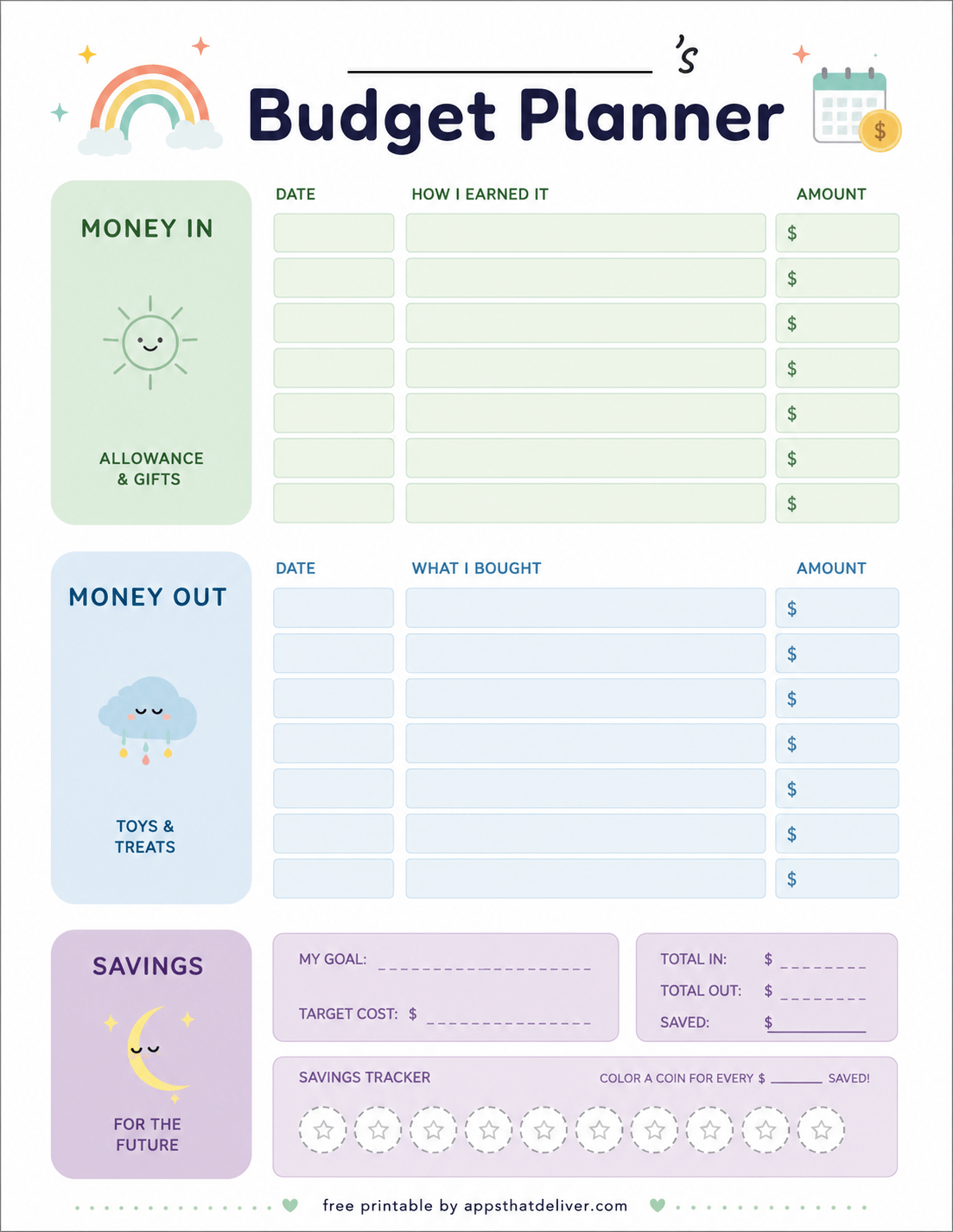
Money In, Money Out, Savings—the classic three buckets, sometimes called Save-Spend-Give. There’s a small goal tracker built in too.
A friend who homeschools asked me for something like this for a “math but useful” unit, and it ended up being one of the ones I use most, honestly. Simple enough that a teacher, a parent, or a grandparent watching the kids for the week can all hand it over without explaining much.
Good for: homeschool lessons, teaching the three-bucket money system
10. Minimal Budget Worksheet for Older Kids
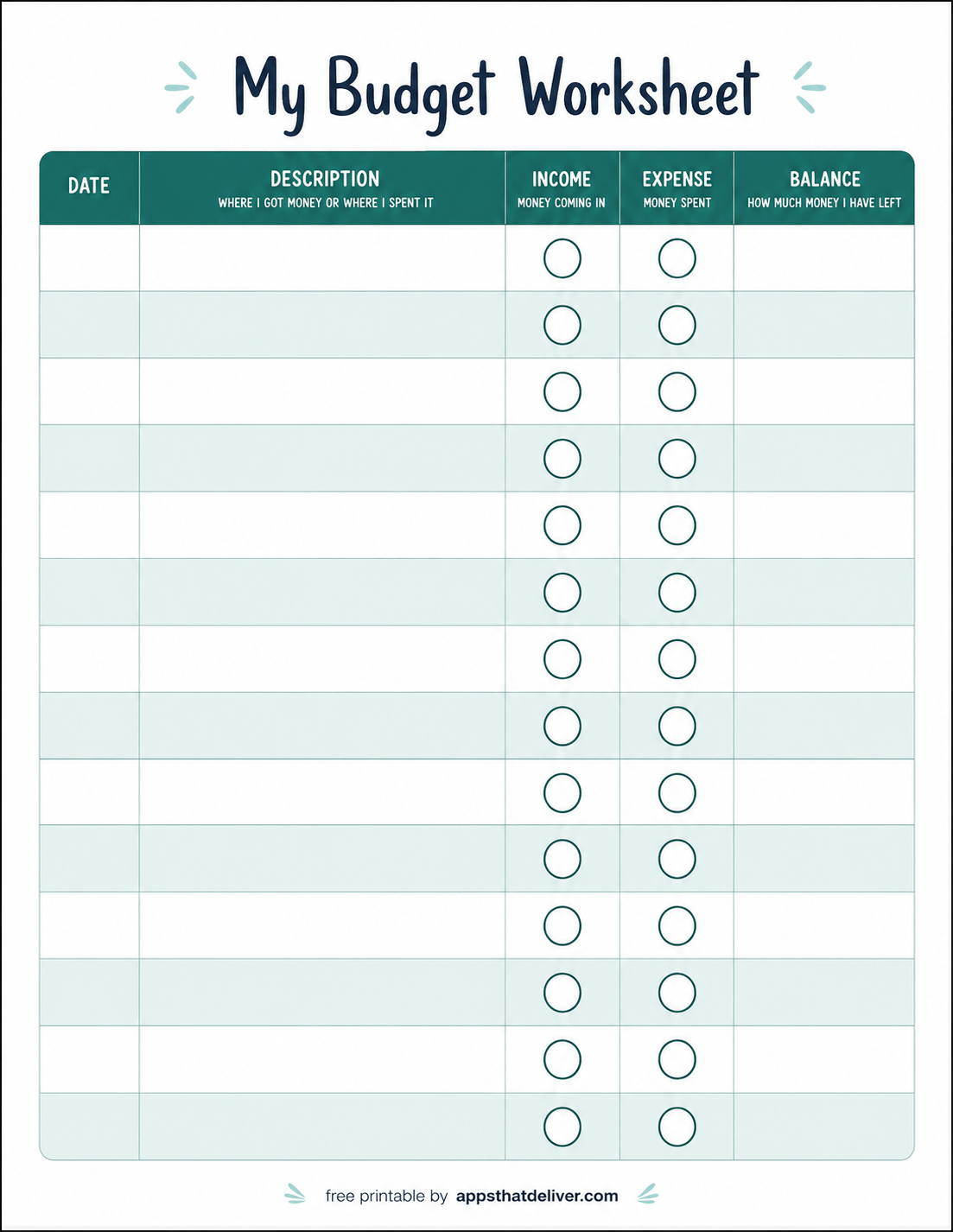
Not every kid wants cartoon stars on their budget sheet. Tweens and teens especially—mine would rather use a plain worksheet than anything that looks like it was made for a seven-year-old.
Date, description, income, expense, balance. Nothing else. Prints fine in black and white too, if you’re trying to save ink.
Good for: tweens and teens, black-and-white printing
Why I Made These
I got tired of apps that promise to “teach kids about money” and then bury it under a login screen, ads, or some subscription you forget to cancel. My kid doesn’t need a fintech product. She needs a piece of paper and five minutes.
These have all been used in my own house, adjusted after actually watching what worked and what my kids ignored completely.
Why Paper Beats an App, at Least for Kids
Writing “$5 – candy” by hand and watching the balance drop hits differently than an app just updating a number on its own. I’ve noticed a few things since we started doing this:
- They think twice before an impulse buy once they know they have to write it down
- Watching a savings goal fill in gets them genuinely excited, more than I expected
- They started asking better questions about money on their own
- No extra screen time, which is a nice side effect nobody asked for but I’ll take it
Who These Work For
- Younger kids (5-8) just starting with allowance
- Tweens managing chore money and small purchases
- Teens saving for bigger goals
- Parents teaching money basics at home
- Teachers and homeschool families doing a money unit
- Grandparents who want to pair birthday cash with something educational
Printing Tips
- US Letter paper, 8.5 × 11
- Print at Actual Size or 100% scale, otherwise the boxes shift around
- Regular paper is fine; cardstock holds up better if kids carry it around
- Print as many as you want, there’s no limit
Frequently Asked Questions
Yes. Every template on this page is free for personal and educational use.
Absolutely. Print a new sheet whenever your kid fills one up.
Yes. Several worksheets were designed specifically with younger kids in mind, with larger writing spaces and simpler layouts.
Yes. Since the templates are blank, you can reuse them year-round.
No, these are meant to be printed and filled out by hand. Writing it out by hand is part of what makes it stick for kids.
Final Thoughts
Teaching kids about money doesn’t need an app, a subscription, or a whole curriculum. A sheet of paper and a few minutes of conversation gets you most of the way there.
Grab whichever ones fit your kid, print a few, and see what sticks. You’d be surprised how fast it clicks once they’ve got something in front of them they can actually write on.