

Getting a kid excited about vegetables is not a small task.
Mine will negotiate over a single bite of broccoli like she’s closing a business deal.
So instead of fighting that battle every night at dinner, I started using trackers—something visual she could color in and actually feel good about, instead of just being told “eat your greens” for the millionth time.
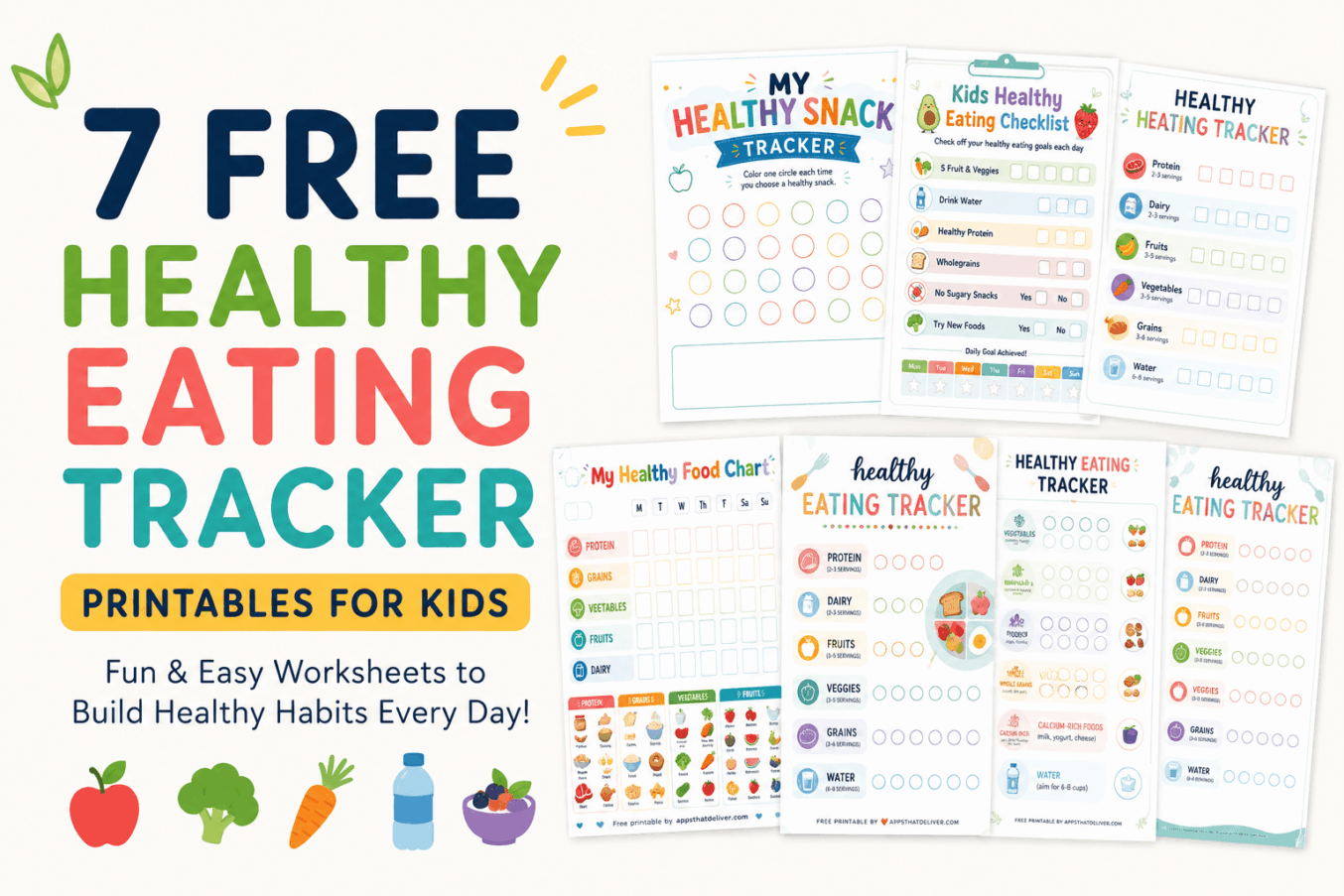
That’s where these came from. Seven free printable healthy eating trackers, each a little different, so you can pick whatever clicks for your kid.
Some use coloring, some use checkboxes, one’s built around the MyPlate model teachers already use in school.
They work for home, classrooms, daycare, homeschool—wherever. All free, all print-ready on regular paper.
What’s in the Collection
Seven worksheets, each with its own angle:
- My Healthy Snack Tracker
- Kids Healthy Eating Checklist
- Healthy Eating Tracker
- My Healthy Food Chart
- Healthy Eating Tracker with Food Examples
- Healthy Eating Tracker with MyPlate Design
- Simple Healthy Eating Tracker
Same goal across all of them, just different ways of getting there depending on your kid’s age and attention span.
7 Free Healthy Eating Tracker Printables
1. My Healthy Snack Tracker
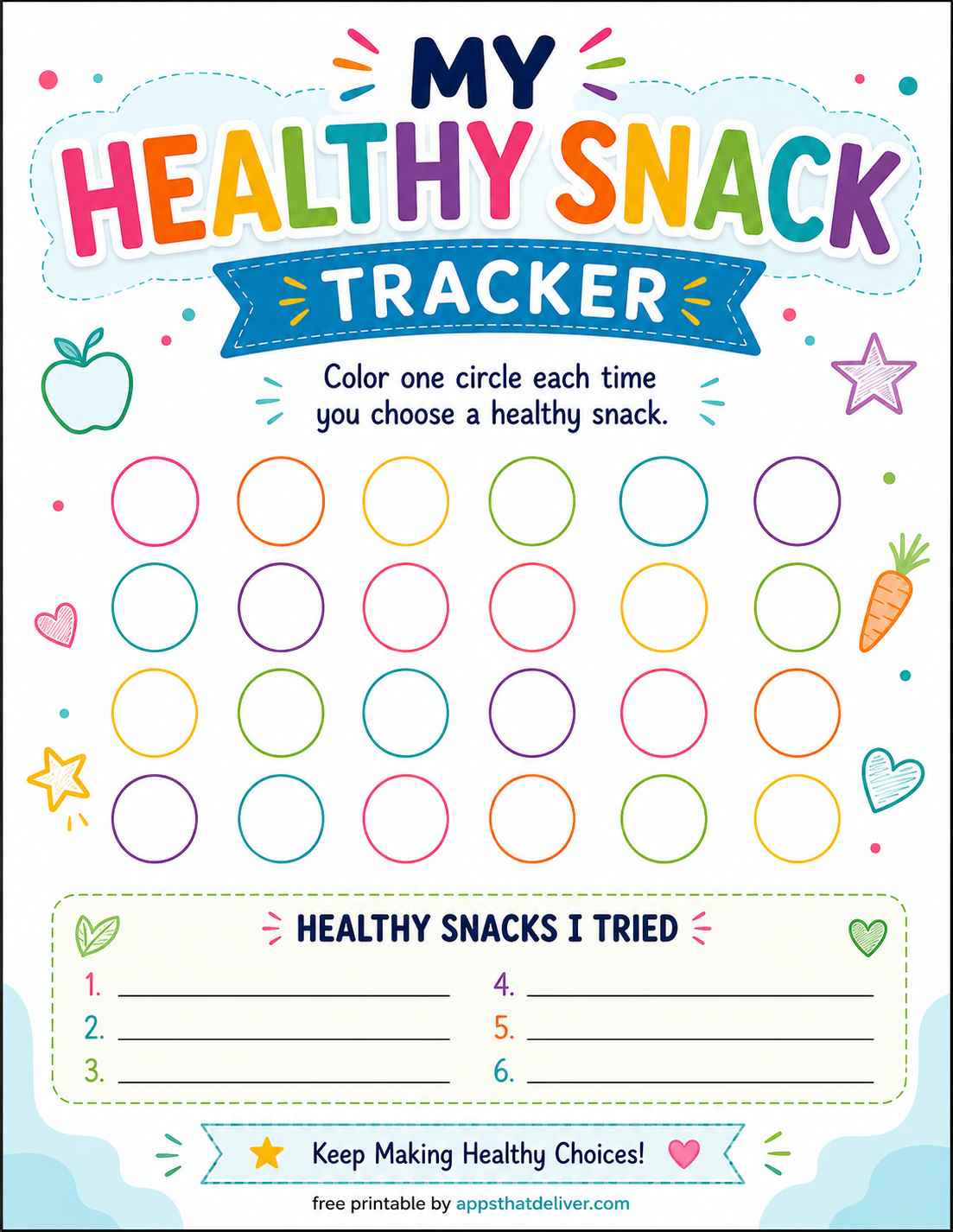
This one’s built around snacks specifically, since that’s usually where the junk food sneaks in the most. Every time a kid picks something healthy, they color in a circle. Small win, immediate reward, no lecture required.
There’s also a spot to write down their favorite healthy snacks, which turned out to be a sneaky way to get my daughter to actually try new foods—she wanted more things to add to her own list.
Good for: snack-time choices, younger kids who like coloring
2. Kids Healthy Eating Checklist
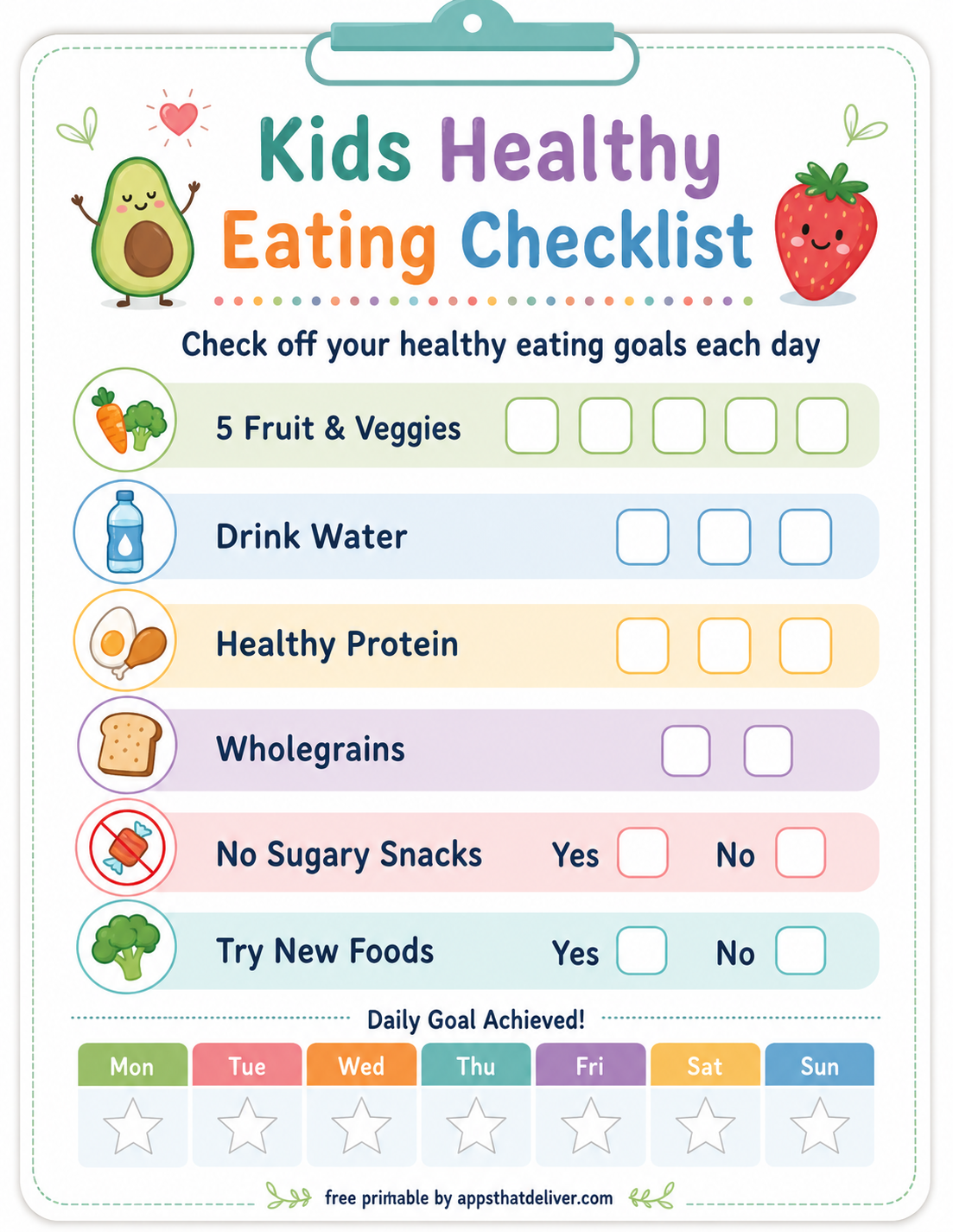
No calorie counting here, which honestly isn’t something a seven-year-old needs to think about anyway. It’s about habits: eating fruit and veg, drinking enough water, getting some protein, choosing whole grains over the sugary stuff, and trying one new food.
There’s a weekly reward section built in too, so the checklist isn’t just a daily thing that gets forgotten—it builds toward something by Friday.
Good for: building daily habits, weekly reward systems
3. Healthy Eating Tracker
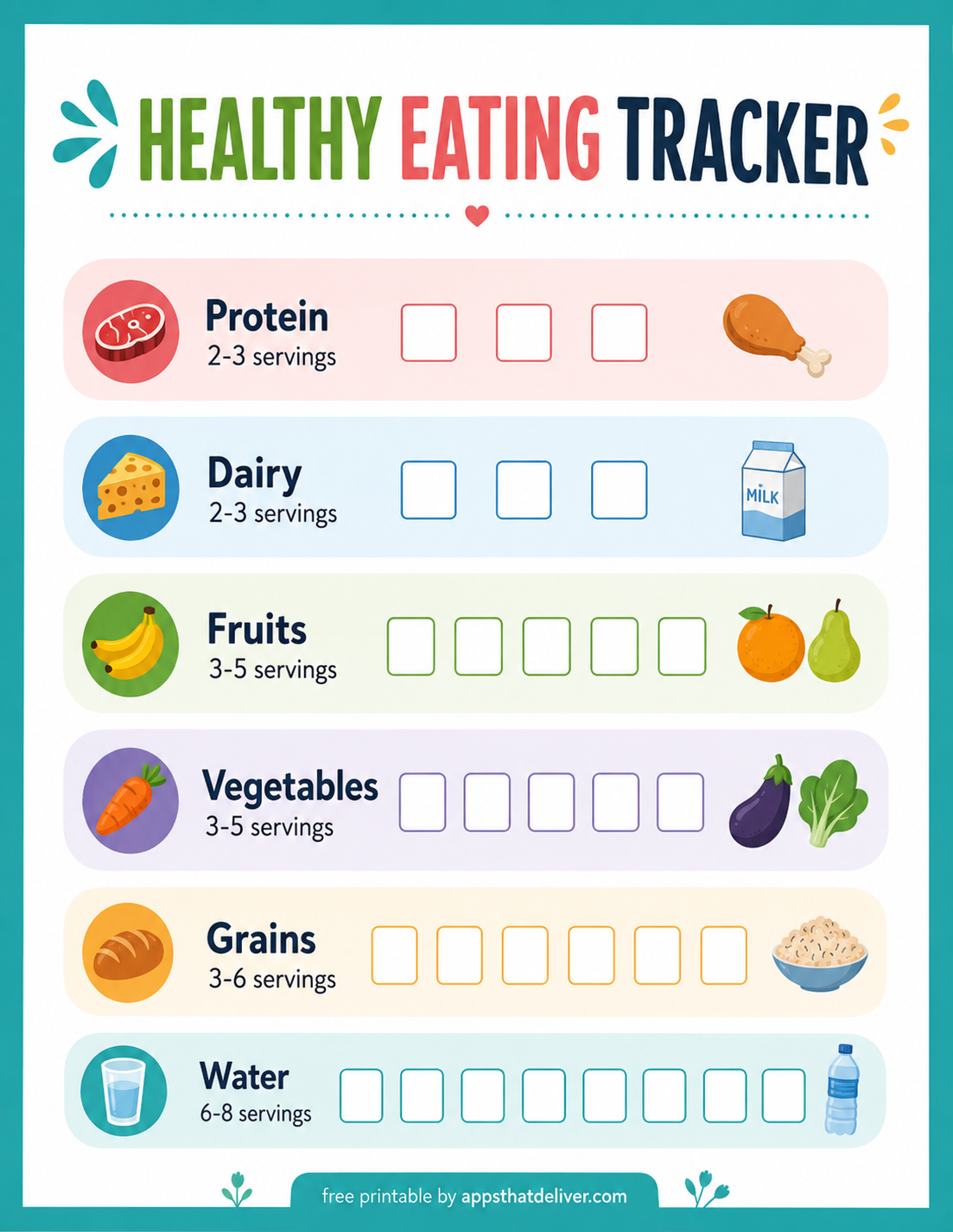
This is the more all-around version, covering protein, dairy, fruits, vegetables, grains, and water all on one page. It’s got little food illustrations next to each category so younger kids can match the picture instead of needing to read the label.
Works well as a daily go-to since it hits every major group without feeling cluttered.
Good for: tracking across all food groups, non-readers or early readers
4. My Healthy Food Chart
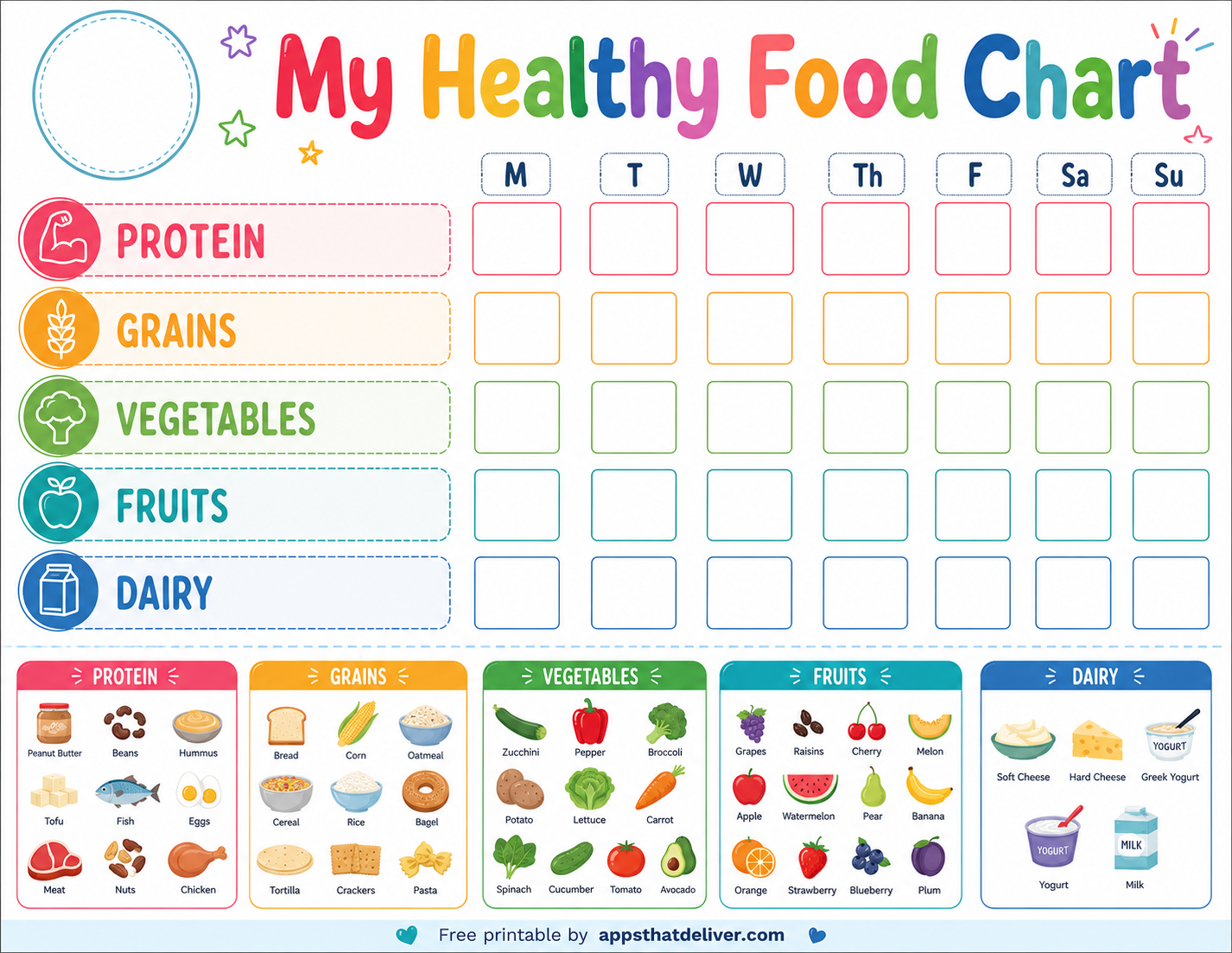
This one’s a full week at a glance—Monday through Sunday—instead of just a single day. Good if you want to actually see patterns, like noticing your kid eats fine Monday to Friday and then everything falls apart on weekends (relatable).
It includes food examples too, so kids aren’t left guessing whether crackers count as a grain or not.
Good for: weekly tracking, spotting weekend habits
5. Healthy Eating Tracker with Food Examples
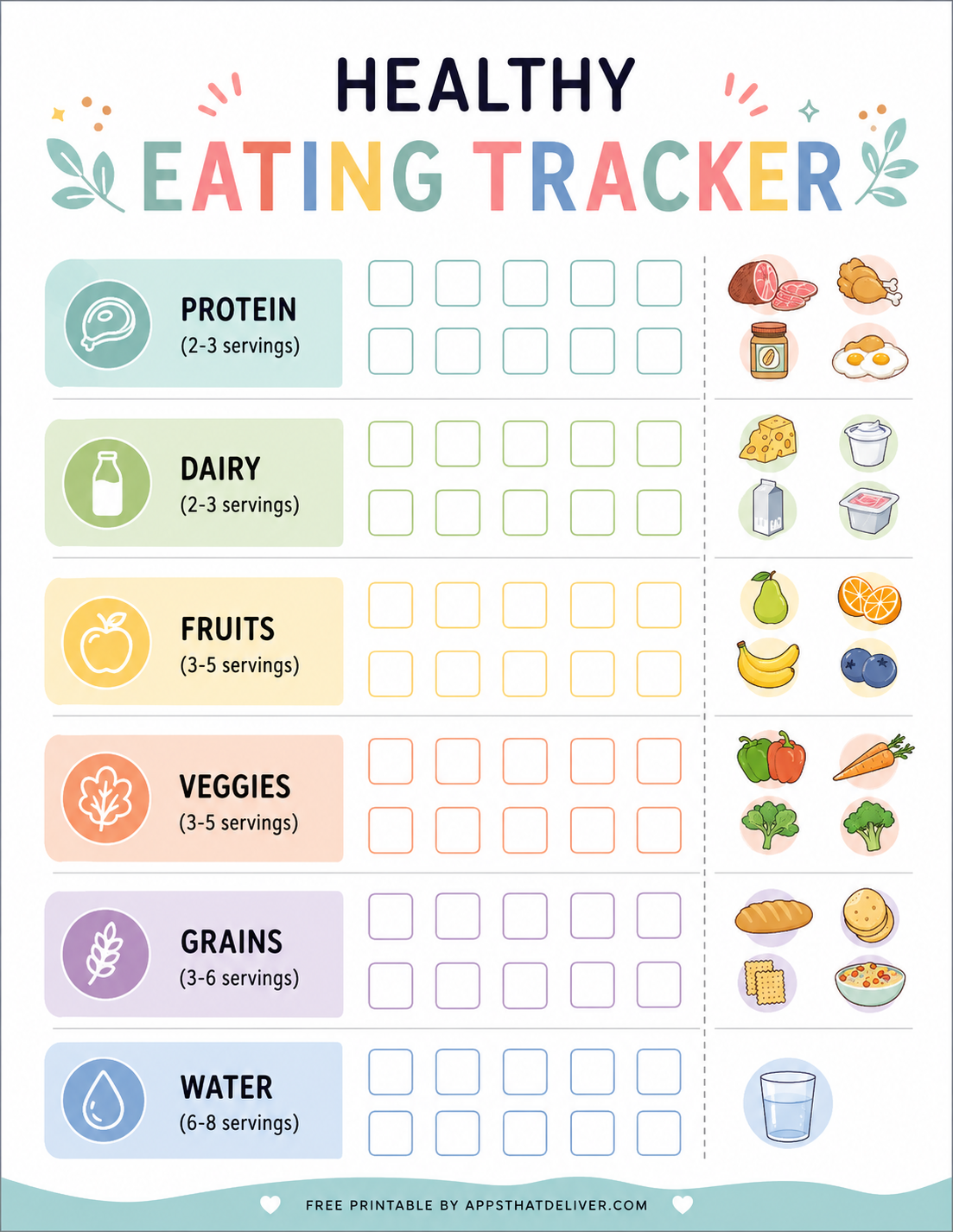
The most visual sheet in the bunch. Colorful food illustrations sit right next to each category, so kids connect the actual food—an apple, a carrot, a glass of milk—with the group it belongs to, instead of memorizing abstract terms like “dairy” or “protein.”
My son, who’s more of a visual kid than a reader, gravitates toward this one every time.
Good for: visual learners, younger kids, classroom use
6. Healthy Eating Tracker with MyPlate Design
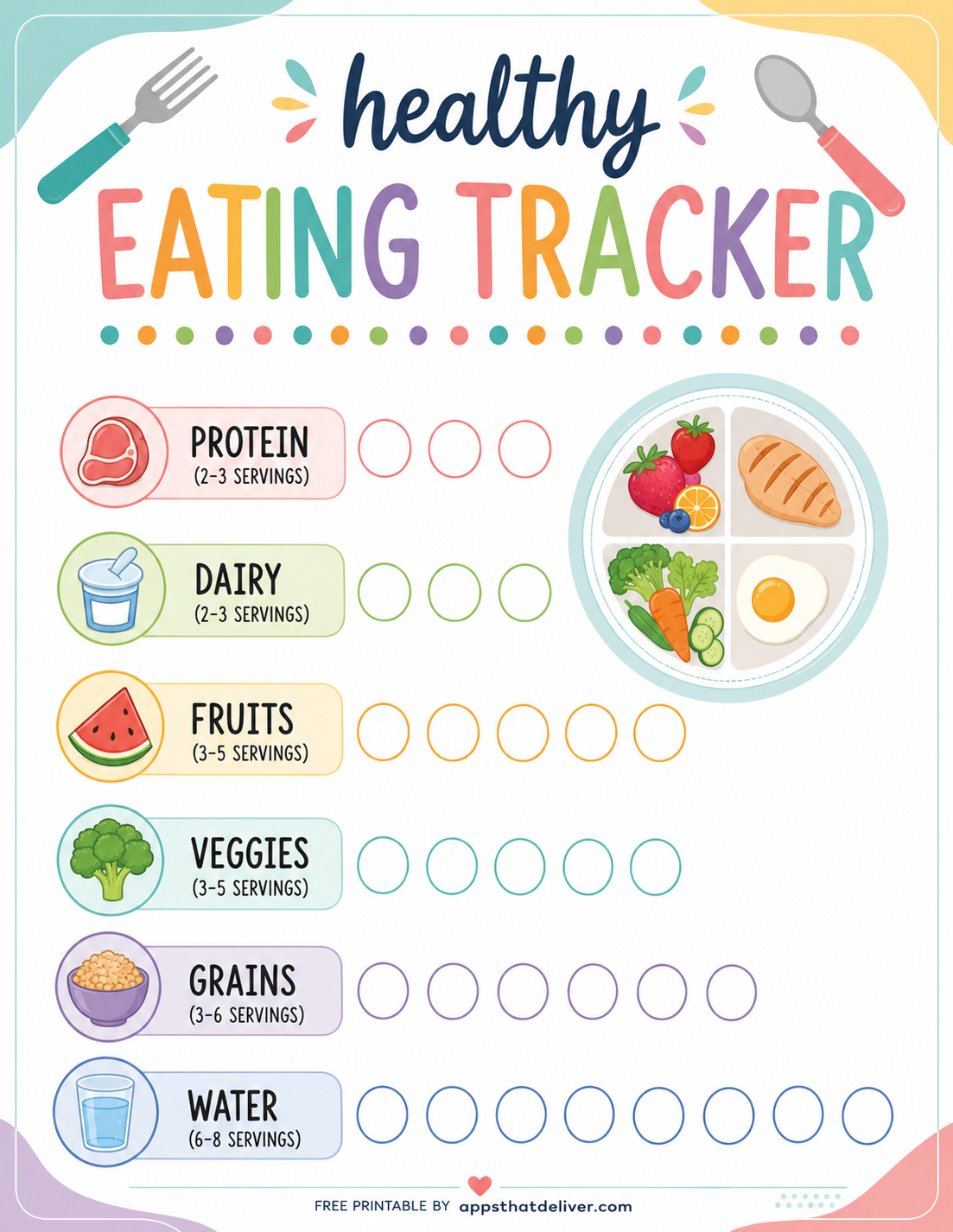
If your kid’s school already uses the MyPlate model, this one lines up with what they’re seeing in the classroom, which makes it easier for the lesson to actually carry over to the dinner table.
It’s a good one to pull out when you’re trying to explain what a “balanced meal” actually looks like without turning it into a whole nutrition lecture.
Good for: reinforcing classroom lessons, explaining balanced meals
7. Simple Healthy Eating Tracker
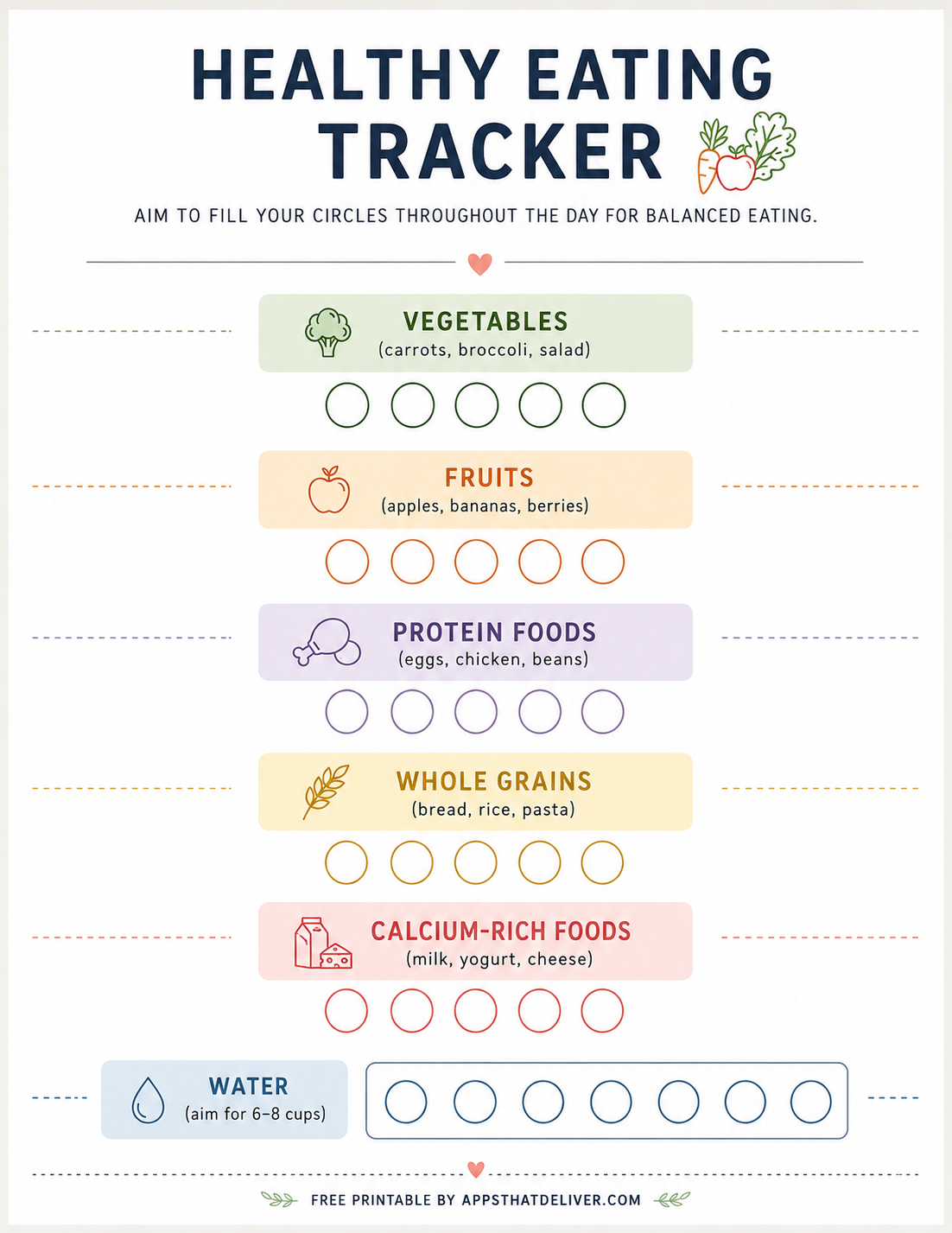
For anyone who looked at the other six and thought “too much going on.” This one strips it down to vegetables, fruits, protein, whole grains, calcium-rich foods, and water—clean layout, no illustrations, no clutter.
Good for: older kids, anyone who wants a no-fuss version
Healthy Snack Ideas Worth Trying
If you’re stuck on what to actually put on the tracker, here’s what’s worked in our house: apple slices, bananas, berries, yogurt, cheese cubes, boiled eggs, cucumber sticks, carrots with hummus, popcorn, whole-grain crackers, nuts (if your kid’s old enough), and homemade trail mix. Nothing exotic—just stuff that’s easy to grab and doesn’t need a recipe.
A Few Things That Actually Helped Us
Stick the tracker on the fridge or a wall where it’s actually seen, not buried in a folder somewhere. Celebrate progress, not perfection—a kid who ate vegetables four out of seven days had a good week, full stop.
Let them color it in themselves instead of doing it for them. And stickers work embarrassingly well as rewards, even for kids who “don’t care about stickers.”
Positive reinforcement goes a lot further here than pointing out what they didn’t eat. Nobody builds a lasting habit off guilt, kids especially.
Frequently Asked Questions
Yes, completely free for personal and classroom use.
US Letter (8.5 × 11 inches).
No, these are printable PDFs meant to be filled out by hand.
Preschool through about Grade 5, though older kids can use them too.
Final Thoughts
Healthy eating doesn’t need to be a battle every night at the dinner table. A little visual, a few coloring circles, and some patience go a lot further than most people expect.
Grab whichever tracker fits your kid, print it out, stick it on the fridge, and see what happens. Small habits now tend to stick around a lot longer than we give kids credit for.