
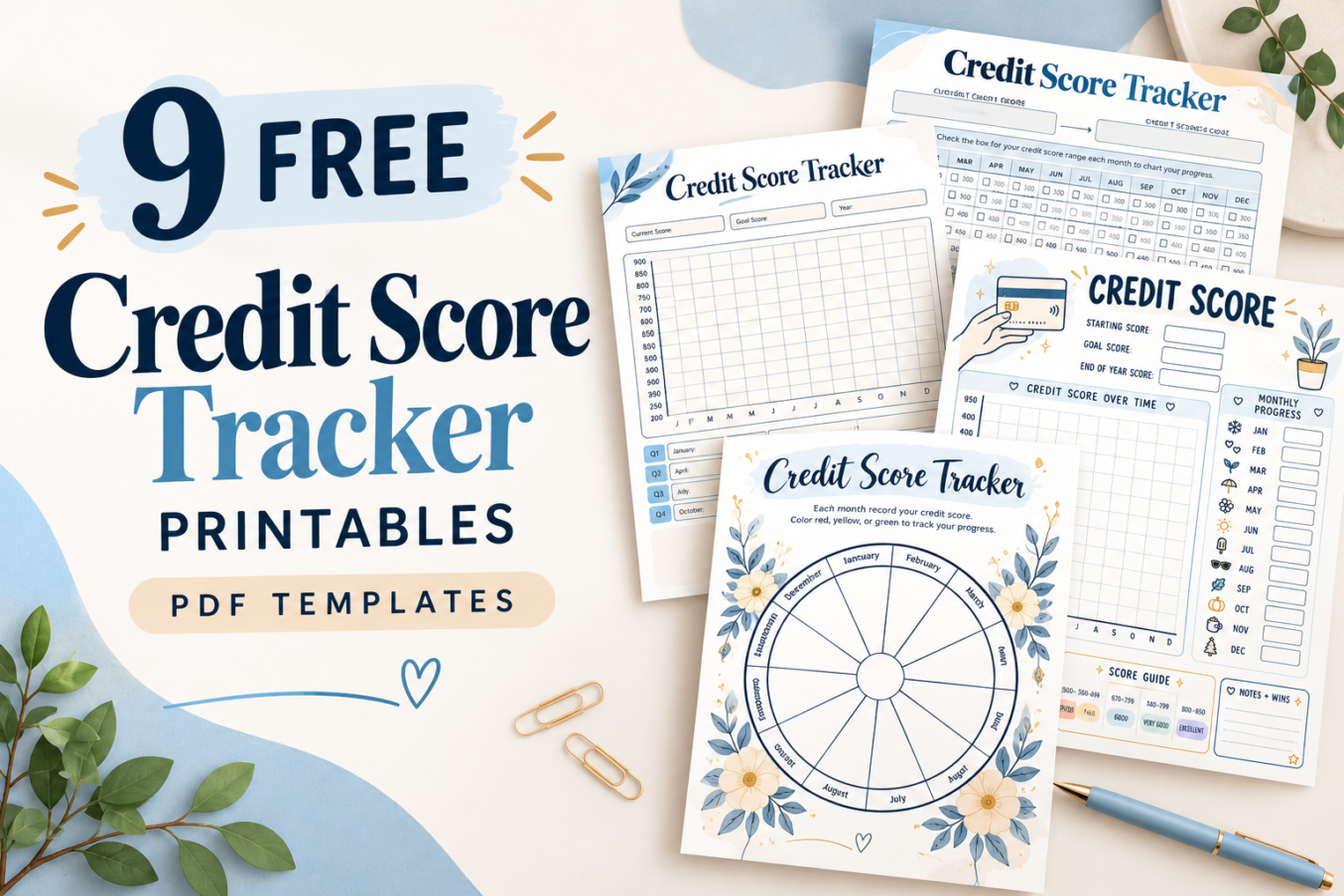

Your credit score can change over time, but remembering what it was a few months ago is not always easy. A simple written record can help you spot patterns, recognize progress, and decide what to look into next.
These free credit score tracker printables give you nine different ways to organize that information. Some focus on plotting a score on a graph, while others include monthly checkboxes, goal-setting spaces, or notes about credit habits.
Each design is blank and ready for you to fill in. You can select one format for the year or use different worksheets for different tracking needs.
Free Credit Score Tracker Printable PDFs
The collection includes a variety of approaches to tracking your score:
- A monthly credit score range checklist with twelve columns
- An annual line graph with quarterly score-entry fields
- A graph and monthly progress sheet with a score-range guide
- A graph with twelve calendar-style monthly boxes
- A large chart with twelve spacious monthly writing boxes
- A twelve-section credit score coloring wheel
- A goal and reflection worksheet with credit score factors
- A monthly score log with changes and credit habit reminders
- A graph with a quarterly summary table
The designs use soft blue, navy, and warm neutral accents, with plenty of blank space for writing, plotting, or coloring by hand.
Why Track Your Credit Score Each Month?
A credit score is a snapshot based on information in a credit report and the scoring model being used. It can move as report information changes, and scores from different sources may not match exactly.
- See longer-term patterns. A month-by-month chart can be easier to interpret than isolated score checks.
- Work toward a target. A written goal gives you something concrete to review as the year progresses.
- Keep helpful context. Record changes such as paying down balances or correcting a report error alongside your scores.
- Notice unexpected changes. A sudden shift can prompt you to review the underlying report rather than guess what happened.
- Stay consistent. A monthly tracking routine helps you keep an organized record without checking the score constantly.
Remember that a score is only one part of your credit picture. Reviewing your credit reports for accuracy and managing payments and balances responsibly can be more useful than focusing on a single number.
How to Use a Printable Credit Score Tracker
- Choose a layout. Pick a graph if you like seeing trends, a table for written records, or the coloring wheel for a visual monthly activity.
- Download and print the PDF. Use the button under your preferred design to download your worksheet.
- Enter your starting score and goal. Fill in the available score, date, or year fields on your chosen sheet.
- Check a consistent source. When possible, compare scores from the same scoring model and provider so changes are easier to interpret.
- Record your result each month. Mark a checkbox, plot a point, color a segment, or write the score in the corresponding month.
- Add context. Use notes or reflection spaces to document relevant credit activity or questions.
- Review your progress. Look at the overall trend and consider whether any unexpected changes need further investigation.
A printable chart does not calculate your credit score. You will need to obtain your score from a credit score provider or financial institution and enter the result yourself.
9 Free Credit Score Tracker Printable Templates
Explore all nine designs below. Each printable has a different layout, so you can choose the one that matches how you prefer to record and review your credit information.
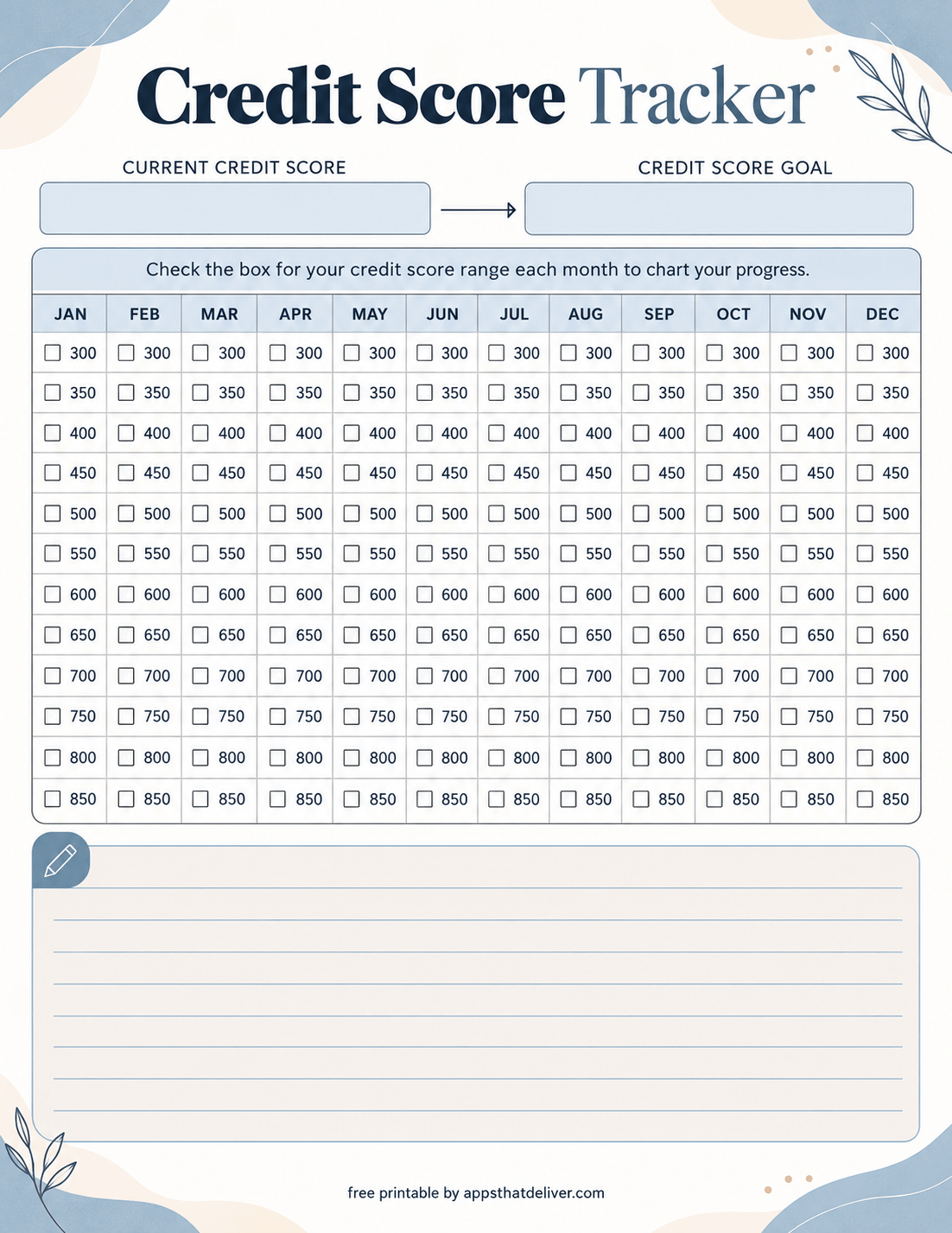
1. Monthly Credit Score Range Checklist
This printable uses a twelve-column table with January through December across the top and score labels from 300 to 850 in increments of 50. Check the box beside the score level that best represents your result each month.
It also has separate current-score and goal-score boxes and a large lined writing area for notes. Choose this version if you prefer marking checkboxes rather than drawing a graph.
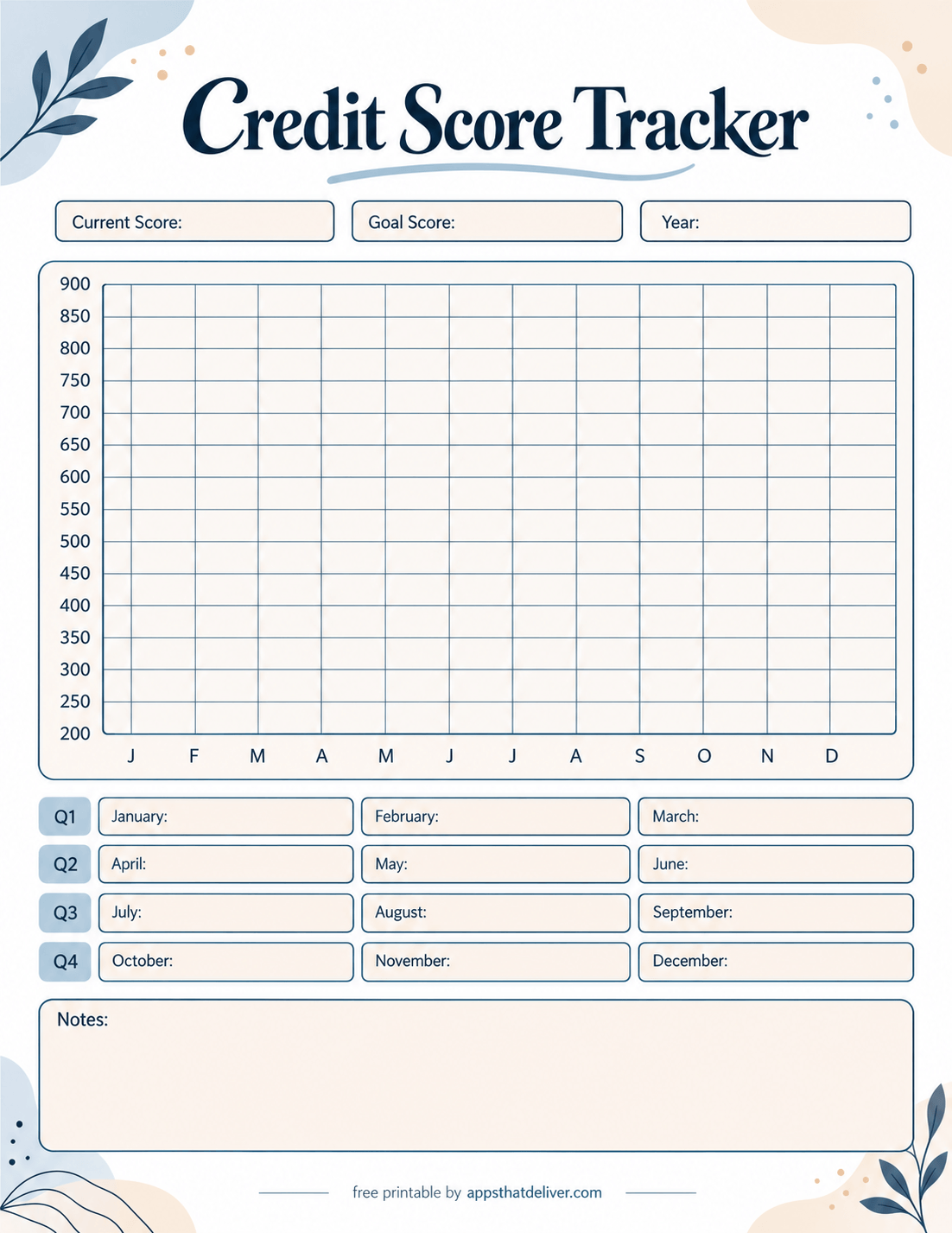
2. Annual Credit Score Line Graph with Quarterly Entries
This layout has a large blank graph with months along the bottom and credit score labels from 200 to 900. Write your current score, goal score, and year in the boxes above the chart.
Below the graph, the months are grouped into Q1 through Q4, with individual spaces for monthly entries and a notes box. It works well if you want a visual trend and a written record together.
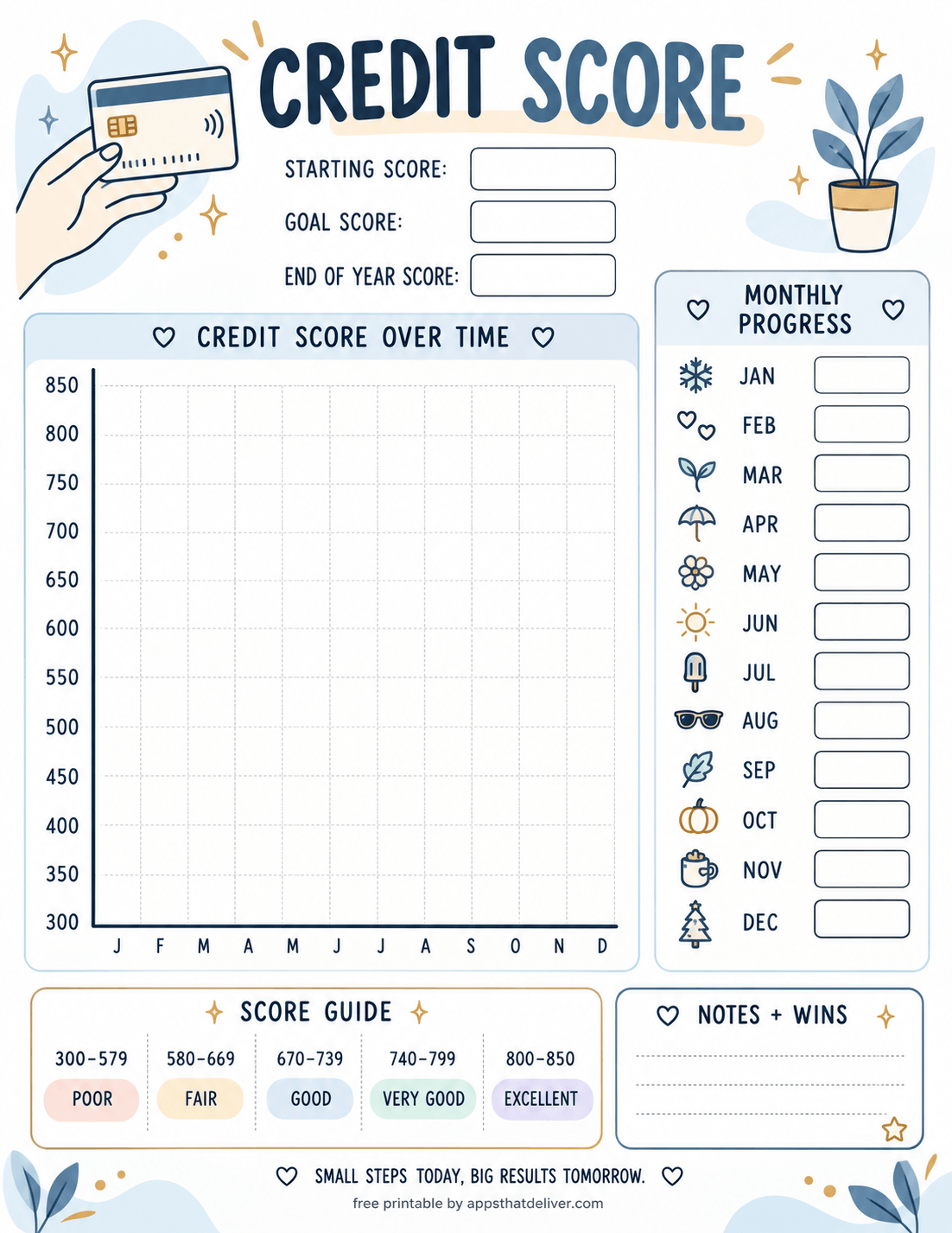
3. Credit Score Tracker with Monthly Progress and Score Guide
This design combines a large score-over-time graph, separate starting, goal, and end-of-year score fields, and twelve small monthly progress boxes.
A five-category score guide and a Notes + Wins section provide additional context and room to record milestones. The chart is labeled from 300 to 850, making it easy to plot your monthly results and connect the points to visualize your progress.
The score guide identifies Poor, Fair, Good, Very Good, and Excellent categories. These labels can help you understand the general score ranges shown on the worksheet, although actual classifications depend on the scoring model.
This is a helpful choice if you want a colorful credit score progress tracker that combines a chart, monthly entries, and personal milestones on one page.
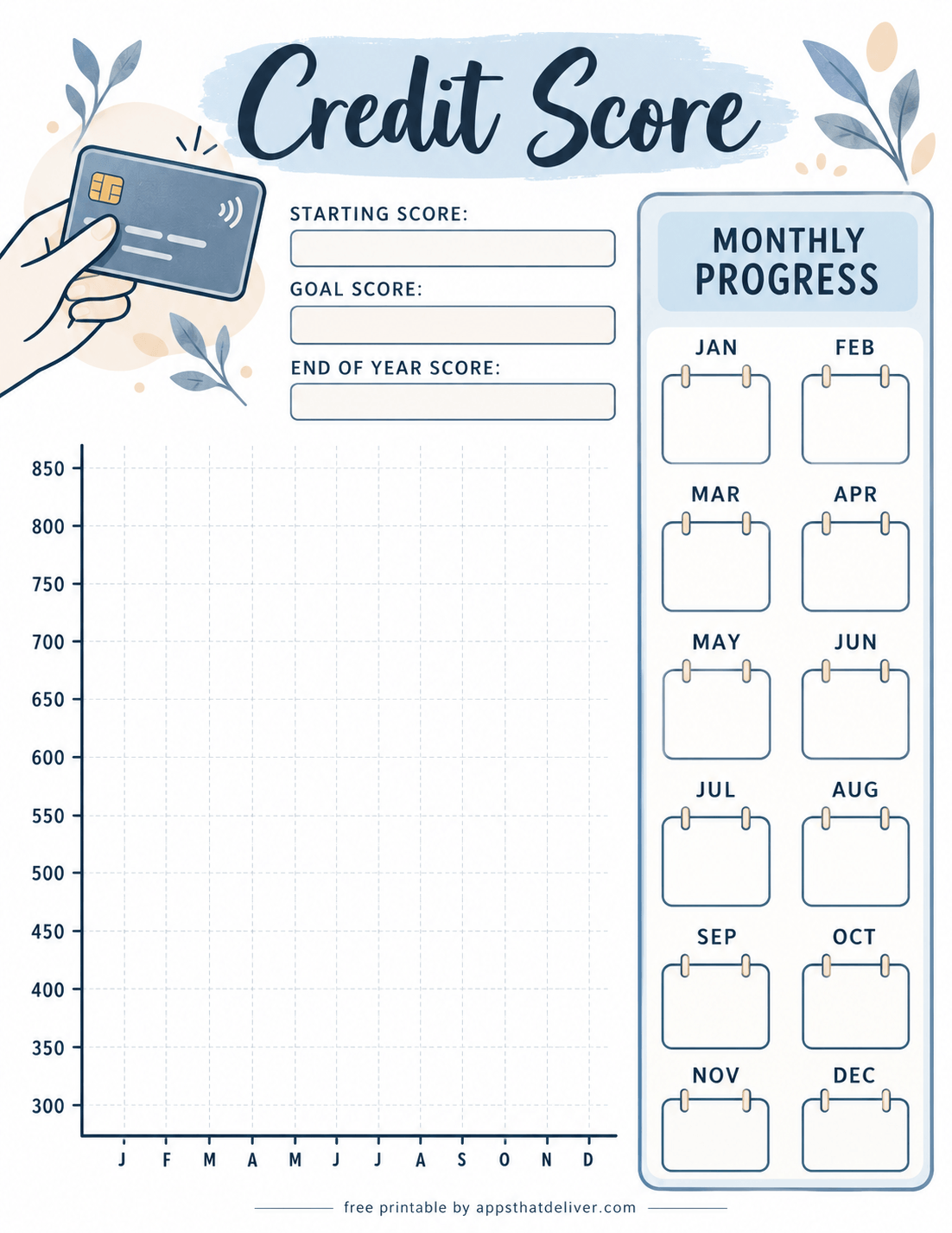
4. Credit Score Chart with Monthly Calendar Boxes
This printable features a large credit score graph on the left and a monthly progress panel on the right. The graph displays scores from 300 to 850, with the twelve months arranged along the bottom.
At the top, you can record your starting score, goal score, and end-of-year score. The monthly progress panel includes twelve blank calendar-style boxes, one for each month from January through December.
You can write your monthly scores inside the boxes while plotting the same results on the graph. This gives you two ways to review your credit score history.
Choose this template if you like having individual monthly writing spaces alongside a large visual chart.
5. Credit Score Tracker with Large Graph and Monthly Boxes
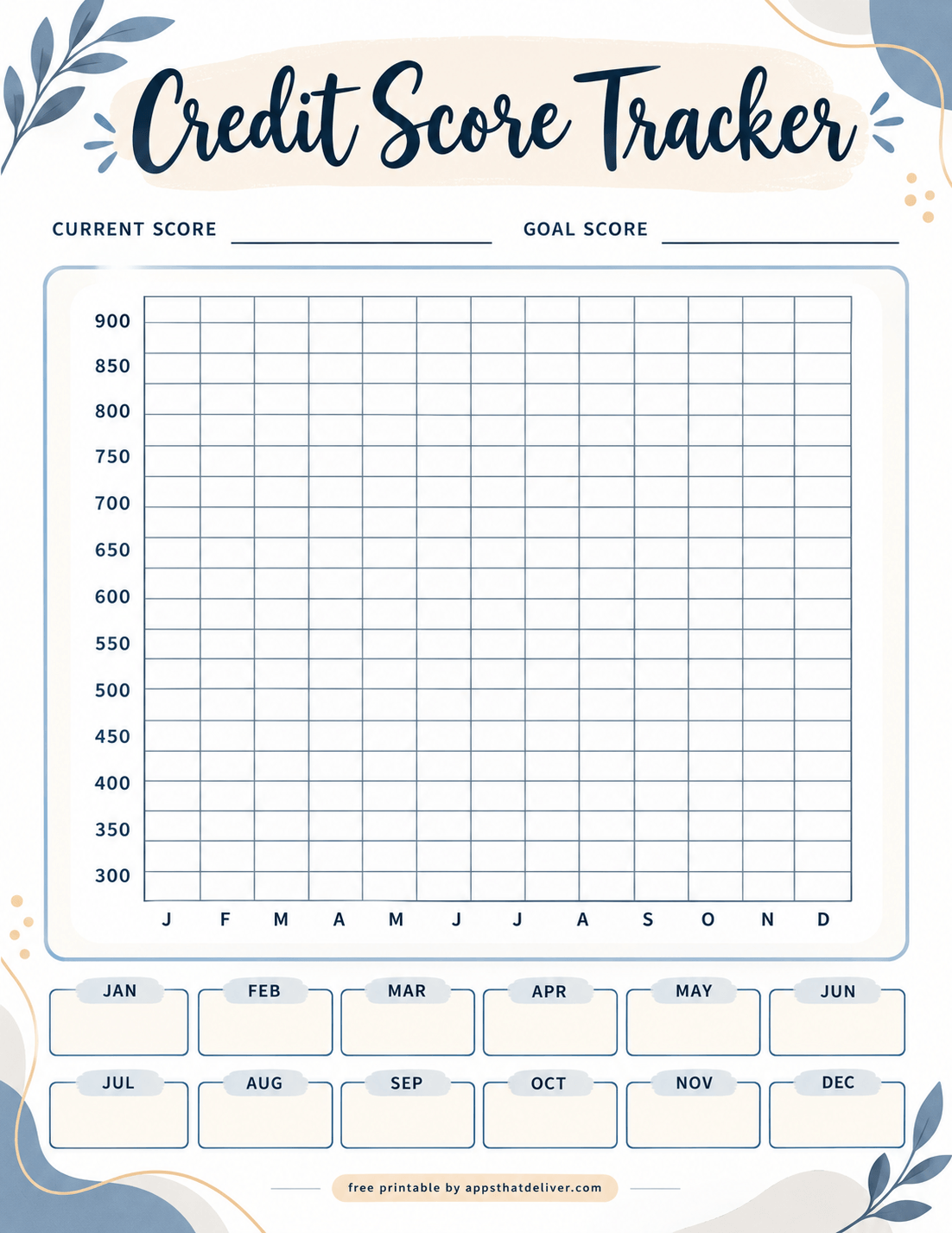
This credit score tracker printable provides a spacious annual graph with score labels from 300 to 900 and monthly markers running from January through December.
Above the graph are separate fields for your current score and goal score. Below it, twelve blank monthly boxes are arranged in two rows, giving you room to record individual scores or short observations.
The large chart makes it easy to see how your score moves throughout the year. You can plot a point each month and connect the points to create a simple line graph.
This design is a good option if you want a straightforward credit score chart with plenty of space for handwritten entries.
6. Circular Credit Score Tracker Coloring Wheel
If you prefer a creative way to track your progress, this circular credit score tracker offers a different approach from traditional graphs and tables.
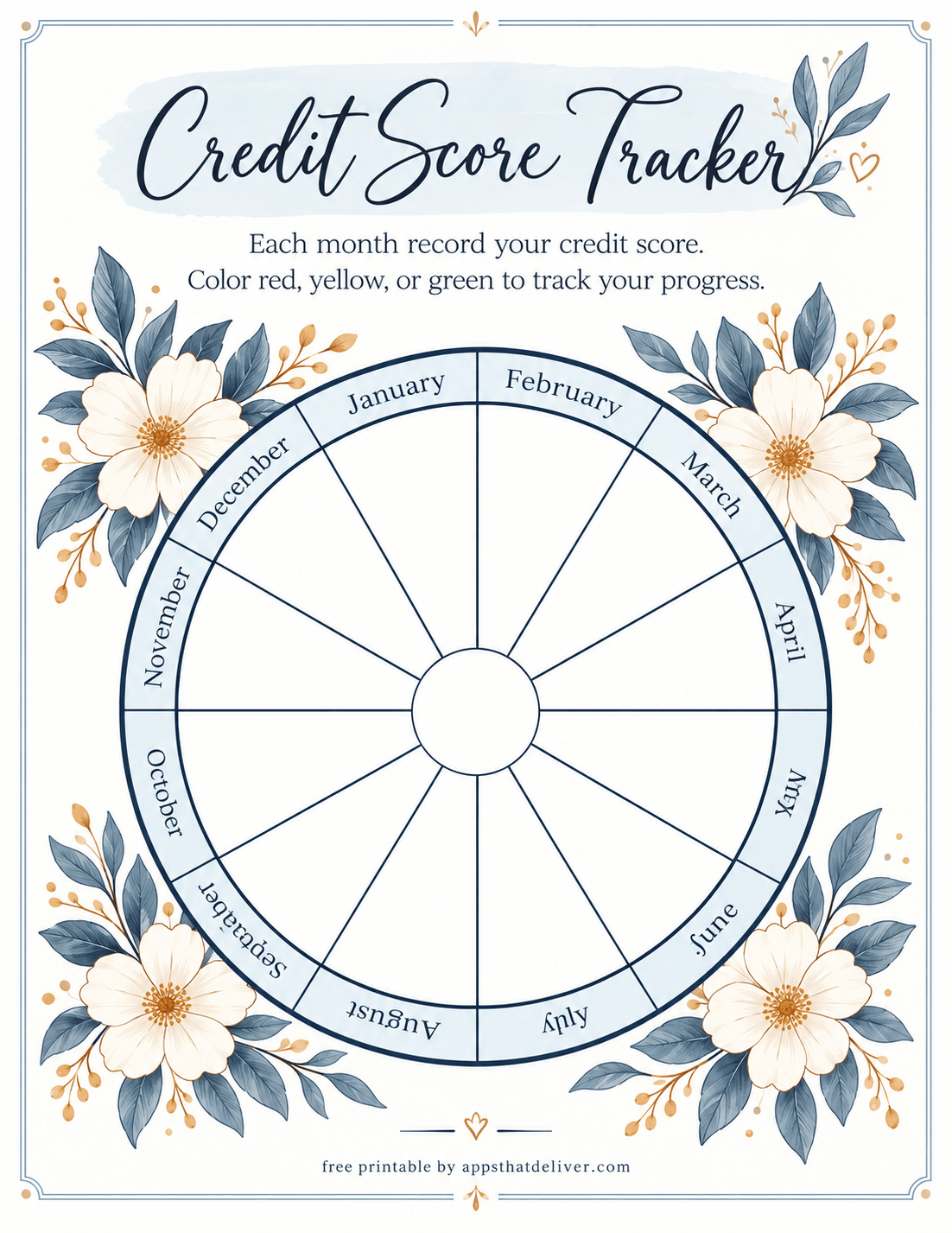
The printable features a large wheel divided into twelve sections, with the months January through December arranged around the outer edge.
Each month, record your credit score and use red, yellow, or green to color the corresponding section according to the progress system you choose. The wheel gradually becomes a visual record of your year.
The printable includes the instructions, “Each month record your credit score. Color red, yellow, or green to track your progress.”
This design works especially well if you enjoy coloring trackers, visual goal-setting activities, or a more decorative approach to monitoring your credit score.
7. Credit Score Goal Tracker with Monthly Reflection
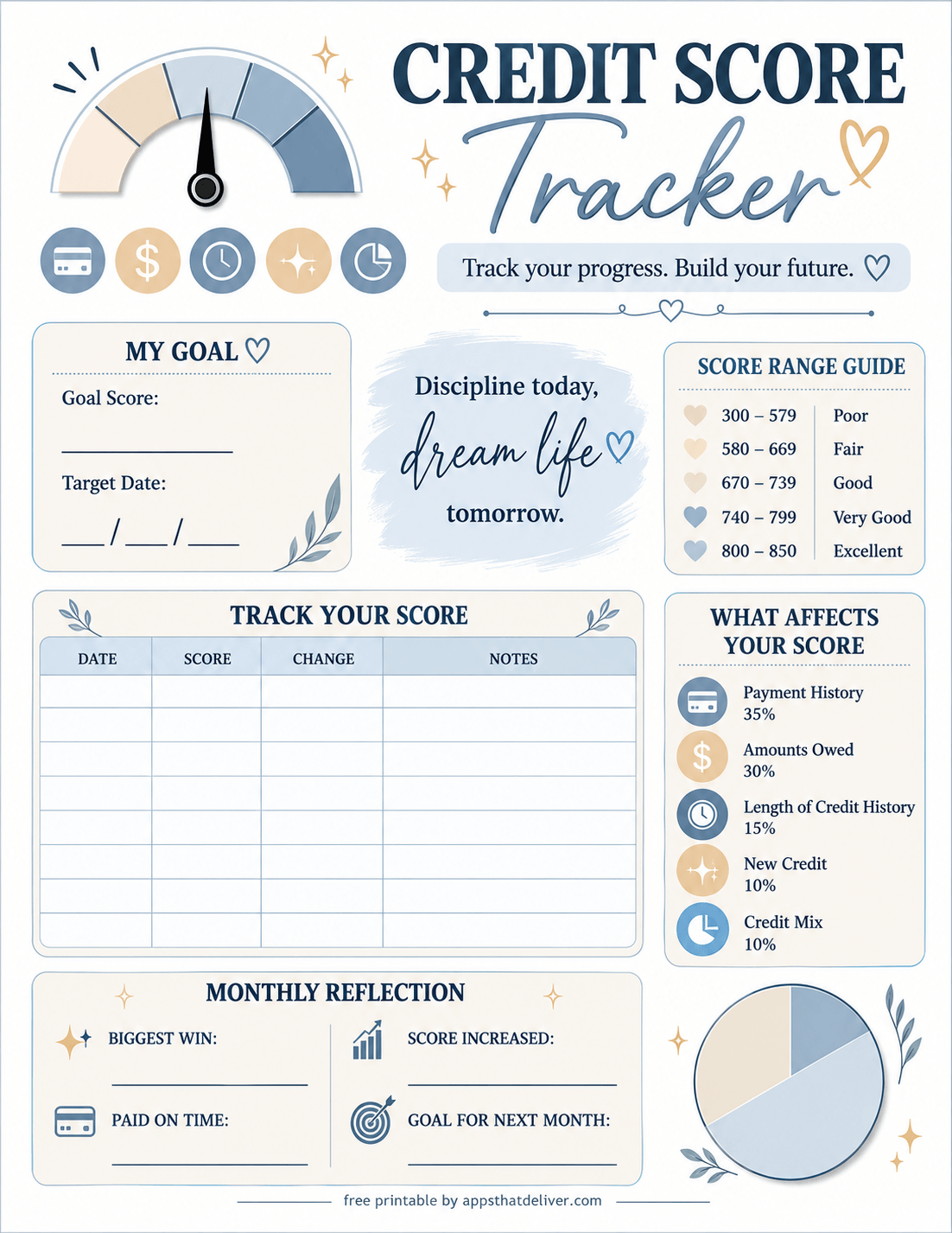
This detailed credit score worksheet combines goal-setting, score tracking, educational reference information, and monthly reflection in one printable.
The My Goal section provides spaces for your target credit score and target date. The Track Your Score table includes columns for date, score, change, and notes, allowing you to record individual updates.
There is also a score range guide showing categories from Poor to Excellent and a section explaining five commonly used FICO scoring factors: payment history, amounts owed, length of credit history, new credit, and credit mix.
The Monthly Reflection section includes spaces for your biggest win, whether you paid on time, how much your score increased, and your goal for the following month.
This is a useful choice if you want more than a simple graph and prefer a worksheet that encourages you to reflect on your financial habits and progress.
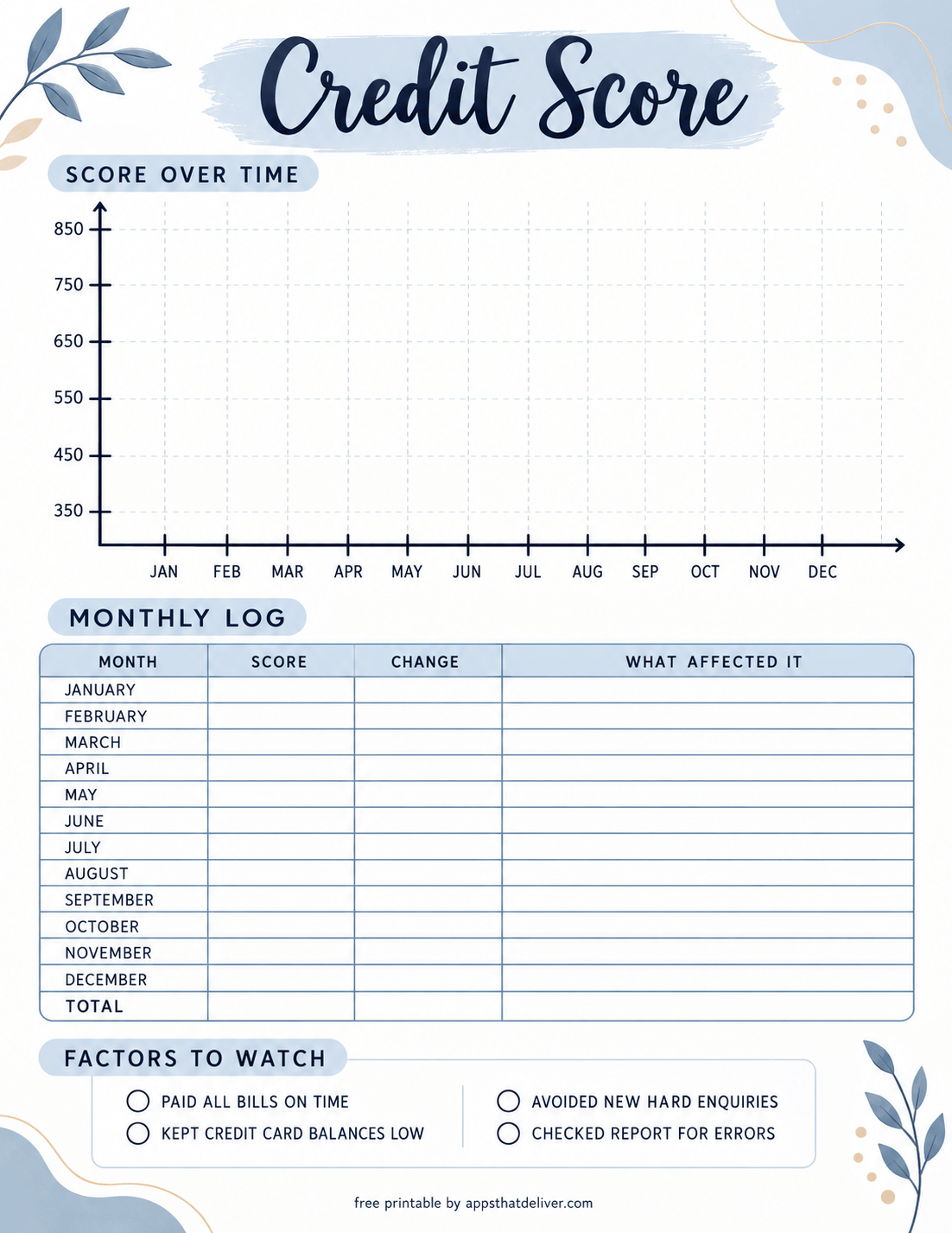
8. Monthly Credit Score Log with Changes and Credit Habits
This credit score tracking worksheet combines an annual progress graph with a detailed monthly log and a short checklist of credit habits.
The graph at the top includes months from January through December and score labels from 350 to 850. Below it, the Monthly Log table includes columns for month, score, change, and what affected it.
The log provides a separate row for every month and a total row at the bottom. This allows you to record both your monthly results and the changes between them.
At the bottom, the Factors to Watch section includes check circles for paying bills on time, keeping credit card balances low, avoiding new hard inquiries, and checking reports for errors.
This printable is especially helpful if you want to maintain a detailed written record and make notes about financial activity that may be relevant to your credit score.
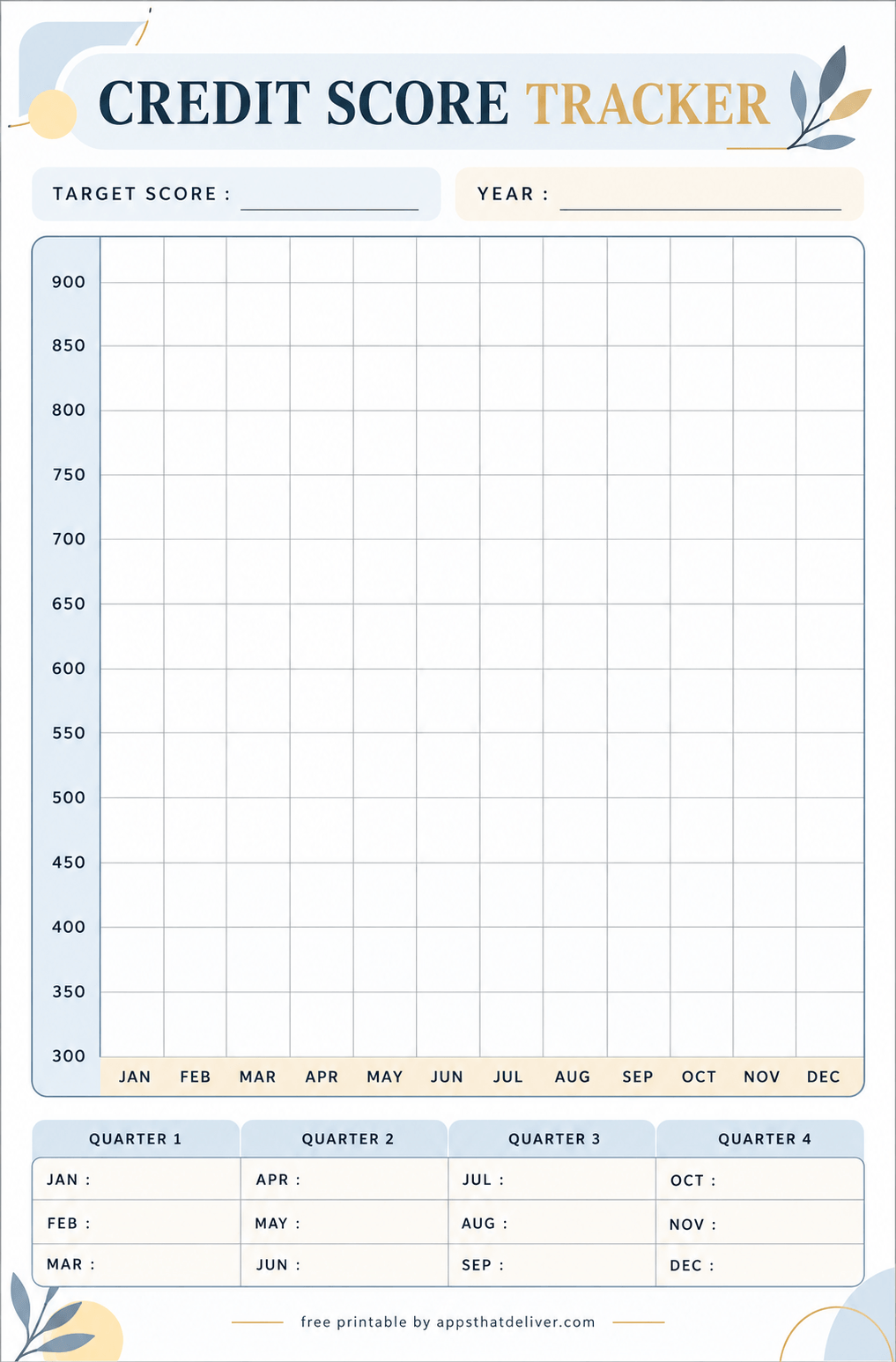
9. Credit Score Tracker with Quarterly Summary Table
This printable features a large annual credit score chart and a neatly organized quarterly tracking table underneath.
At the top, you can write your target score and year. The graph includes score labels from 300 to 900, with January through December along the horizontal axis.
Below the chart, a table divides the year into Quarter 1, Quarter 2, Quarter 3, and Quarter 4. Each quarter contains three labeled monthly entry spaces.
You can record your credit score in the corresponding month and plot the same result on the chart above. The quarterly layout makes it convenient to compare progress across different parts of the year.
This is a practical choice if you want a clean, organized credit score tracker with both a full-year graph and a structured quarterly summary.
Which Credit Score Tracker Should You Choose?
With nine different layouts available, the best printable depends on how much detail you want to record and whether you prefer charts, checklists, or writing spaces.
- For quick monthly check-ins: Design 1 uses simple score-level checkboxes.
- For a classic annual graph: Designs 2, 5, and 9 make it easy to see a score trend over twelve months.
- For extra monthly writing space: Designs 3 and 4 provide separate score-entry boxes.
- For a coloring activity: Design 6 uses a circular, twelve-month wheel.
- For credit goals and reflection: Design 7 includes a score guide, credit factors, and a reflection area.
- For a detailed monthly record: Design 8 includes score changes and notes on what affected them.
You can also use more than one template. For example, a graph-based tracker can show your annual progress while a detailed monthly log provides additional context.
Tips for Making Sense of Your Credit Score Progress
1. Compare Scores from the Same Source
Credit scores are not all calculated the same way. Different models and credit bureaus may produce different results, even on the same day.
Using a consistent source makes your month-to-month comparison more meaningful. If you switch providers or scoring models, consider making a note on your worksheet.
2. Look for Trends, Not Just One-Month Changes
One score movement does not tell the whole story. Look at several months together, and use the notes section to record changes you think may be relevant.
A change in score does not automatically prove that any one action caused it. Longer-term trends can provide a more useful perspective than a single result.
3. Keep Your Credit Reports in Mind
Your credit report contains the underlying account and payment information used by scoring systems. Checking reports for inaccuracies and addressing mistakes can be an important part of monitoring your credit health.
If you notice an unexpected score change, reviewing the information in your credit reports may help you understand what happened.
4. Record Relevant Financial Habits
When your printable includes notes or reflection sections, consider recording relevant activities such as making payments on time, reducing credit card balances, or reviewing your credit reports.
These notes can help you remember what was happening during a particular month, although they do not establish the exact reason for a score change.
5. Choose a Realistic Tracking Routine
Recording your score once a month is a practical way to use these worksheets. You do not have to fill every field or use all nine templates.
Pick a format that you can maintain consistently. A simple tracking routine is often more useful than an elaborate system you rarely update.
Credit Score Ranges: What Do They Mean?
Some printables in this collection include a five-part credit score guide. For commonly used FICO scores ranging from 300 to 850, the categories are:
- 300–579: Poor
- 580–669: Fair
- 670–739: Good
- 740–799: Very Good
- 800–850: Excellent
These categories are useful as a general reference, but not every scoring model uses the same labels or ranges.
Some worksheets include graph scales reaching 900 or starting at 200. These are chart labels rather than a universal credit score classification. Always interpret your result using the scoring model provided with it.
Frequently Asked Questions
Yes. The collection includes nine free printable designs intended for PDF download and handwritten tracking.
There are nine unique designs, including graphs, checklists, monthly logs, a coloring wheel, and goal-setting worksheets.
A monthly entry is a convenient routine for these twelve-month templates. Use a consistent score source whenever possible.
No. These worksheets are for recording scores obtained from a credit score provider, lender, or financial institution; they do not calculate a score.
Review the score source and your credit reports for changes or errors. A single score movement may have several explanations, and different scoring models can give different results.
Designs 2, 3, 4, 5, 8, and 9 include score graphs. Design 6 uses a twelve-part coloring wheel instead.
Yes. The layouts are undated or include a blank year field, so you can print another copy for a new tracking period.
Final Thoughts
Keeping track of your credit score does not require a complicated spreadsheet or app. A simple monthly worksheet can give you a clear record of where you started, how your score has changed, and what you want to work toward.
This collection includes 9 free credit score tracker printables, covering everything from detailed monthly logs and progress charts to goal-setting worksheets and a creative coloring wheel.
Choose the design that fits your tracking preferences, download the printable PDF, and begin recording your monthly credit scores. You can use one favorite worksheet throughout the year or combine different layouts for a more detailed record.
Happy tracking!